

Start here
Why meal prep works for families
Next
What to prep first: choosing your starting point
Then
Batch cooking basics
When you're ready
Portioning and storage that actually works
Put it together
Building your first prep routine
Why meal prep works for families
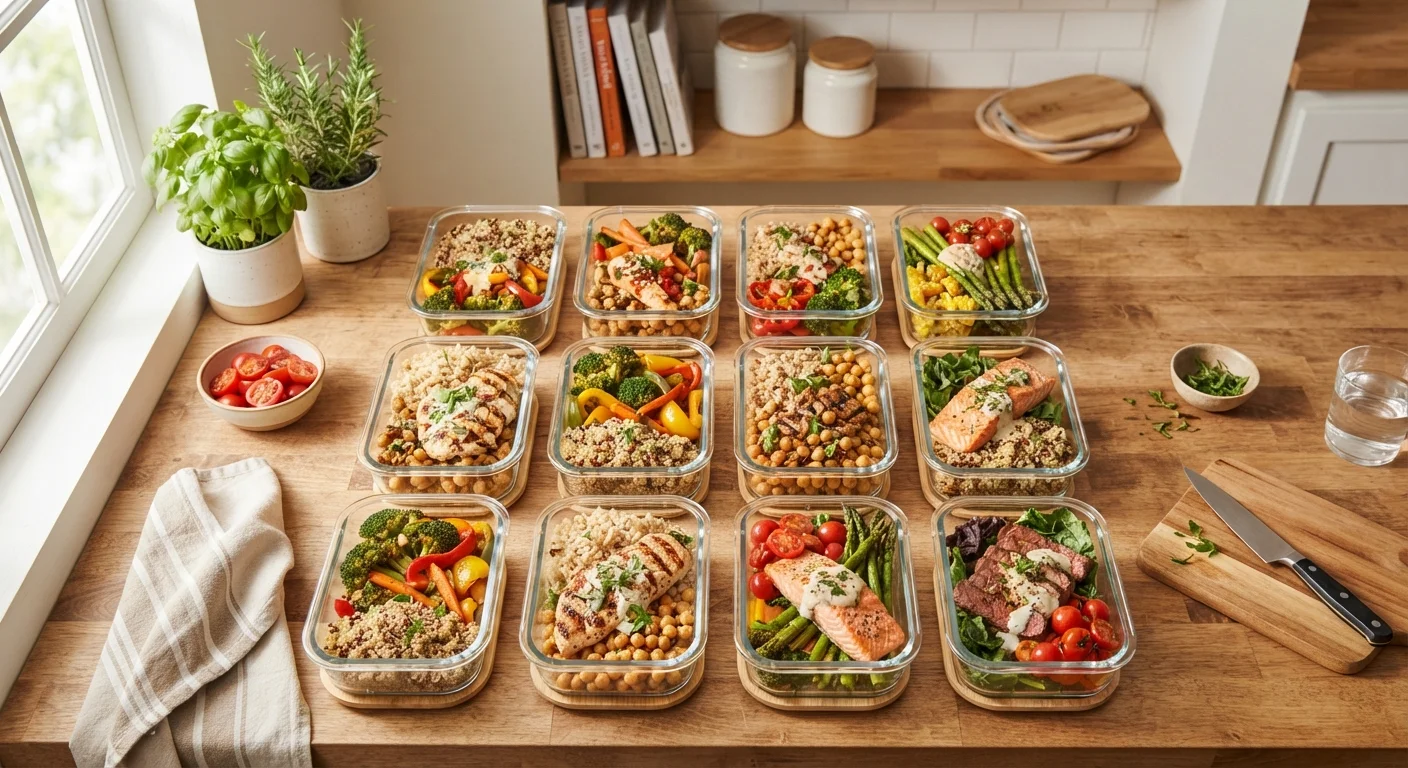
Weeknight cooking pressure is one of the most common reasons families reach for takeout or convenience food, both of which tend to cost more and offer less nutritional control than home cooking. Meal prep addresses this by front-loading the work: you do most of the chopping, cooking, and portioning during a calmer window (often the weekend) so that weeknights become mostly assembly.
The financial case is straightforward. Cooking in larger quantities uses energy more efficiently, reduces packaging waste, and makes it easier to buy ingredients in bulk at lower per-unit costs. Families who prep consistently also report throwing away less food, because portioned meals get used before they spoil rather than sitting forgotten in the back of the fridge.
For more on managing overall grocery spending, see our guide to eating well without overspending at the grocery store.
Batch cooking
Cooking a large quantity of one ingredient or recipe at once so the surplus is ready to use across several meals during the week.
Meal prep
The practice of preparing part or all of multiple meals in advance, typically during one dedicated session, to save time and effort on busier days.
Portioning
Dividing cooked food into individual or per-meal quantities before storing so each serving is ready to grab without additional measuring.
Building-block approach
Prepping a handful of versatile base ingredients rather than complete finished dishes, then combining them in different ways throughout the week.
Food safety temperature zone
The range between 40 and 140 degrees Fahrenheit in which bacteria multiply rapidly. Cooked food should be kept below 40 degrees (refrigerator) or above 140 degrees (hot holding) to stay safe.
What to prep first: choosing your starting point
Beginners often try to prep every meal for the week and burn out after one attempt. A more durable approach is to pick two or three components that your family eats across multiple meals and prep only those.
Good starting candidates include:
- A cooked whole grain (brown rice, farro, or oats for breakfast)
- A batch of roasted or steamed vegetables
- A simple protein (baked chicken thighs, hard-boiled eggs, or cooked lentils)
These three components can become grain bowls, wraps, stir-fry bases, or soup additions depending on the night. This building-block model keeps meals varied without requiring you to prep ten separate dishes.
If you want a concrete week of dinners to plan around, our shoestring dinner plan walks through exactly that.
Batch cooking basics
Batch cooking means preparing a larger quantity of a recipe or ingredient than you need for one meal so the surplus covers future meals. The process does not require special equipment beyond what most home kitchens already have.
Ingredients that batch well
Dried legumes (black beans, chickpeas, lentils) cost very little per serving and cook in large quantities with minimal active effort, especially in a slow cooker or pressure cooker. Whole grains like brown rice or barley hold their texture in the fridge for several days. Root vegetables (sweet potato, carrot, beets) roast well in large sheet-pan batches.
Ingredients that need careful handling
Pasta absorbs liquid as it sits and becomes mushy; cook it slightly under done if you plan to reheat it. Eggs scrambled in advance turn rubbery; hard-boiled eggs in the shell keep far better. Fresh herbs wilt quickly, so add them when serving rather than during prep.
Our article on pantry staples that anchor budget meals covers which shelf-stable items are worth keeping stocked year-round.
Portioning and storage that actually works
How you store prepped food determines how long it stays safe and how appealing it is when you pull it out mid-week. The general refrigerator guideline for cooked foods is three to four days at or below 40 degrees Fahrenheit. Anything intended for later in the week belongs in the freezer immediately after cooling.
Cool food before sealing containers
Placing hot food directly into an airtight container and sealing it traps steam, which creates condensation and speeds bacterial growth. Spread cooked food on a sheet pan or leave containers uncovered for 20 to 30 minutes before sealing and refrigerating. Shallow containers cool food faster than deep ones.
Container choices
Airtight containers prevent odor transfer and moisture loss. Uniform container sizes make stacking easier and help with portioning because you can see at a glance how many servings remain. Labeling each container with the food name and prep date takes about ten seconds and eliminates guesswork later.
Freezer storage
The freezer extends your prep significantly. Cooked grains, soups, and many casseroles freeze well and reheat without quality loss. For a deeper look at what freezes safely and how to build a rotation, see our guide to using your freezer smartly and safely.
Building your first prep routine
A repeatable routine is what turns a one-time experiment into a reliable habit. Most families find that setting aside a specific block of time once a week works better than trying to prep opportunistically throughout the week.
A practical starting sequence:
- Plan the week's meals before shopping so you buy only what you will actually use.
- Shop with a list organized by store section to reduce time and impulse purchases.
- On prep day, start the longest-cooking items first (grains, legumes) and use the waiting time to chop vegetables or prepare proteins.
- Cool everything to room temperature before sealing containers and refrigerating.
- Set a reminder mid-week to move anything from the fridge to the table before it reaches day four.
If you are new to managing household food spending more broadly, our food budgeting introduction for families covers the foundational steps before you even reach the kitchen.
This article is for general informational purposes only and is not a substitute for advice from a qualified nutrition or healthcare professional. Consult a registered dietitian or your family's healthcare provider for guidance tailored to your household's specific health needs.
Frequently Asked Questions
Most families spend one to two hours on a single prep session once they have a routine in place. Beginners may take closer to two to three hours while learning the process. Prepping only two or three components rather than full meals keeps the time commitment manageable from the start.
Airtight containers made of glass or BPA-free plastic work well for most prepped foods. Glass is durable and goes from fridge to microwave without transferring to another dish. Standard rectangular containers stack efficiently and make the most of refrigerator shelf space.
Most cooked foods stay safe in a refrigerator set at or below 40 degrees Fahrenheit for three to four days. Foods you want to keep longer should go directly into the freezer. The USDA FoodKeeper app is a free reference tool for specific storage guidance by food type.
Yes. Inexpensive pantry staples like dried beans, lentils, rice, and oats form the backbone of affordable batch cooking. Pairing those with whatever produce is in season or on sale keeps costs down further. See our <a href="/food-and-drink/pantry-staples-anchor-budget-meals">pantry staples guide</a> for specific ingredient ideas.
Leafy salads dressed with vinaigrette, crispy-textured foods like breaded items, and cut avocado do not hold up well after a few hours. These are better assembled just before eating. Prep the components separately and combine them at mealtime.
Yes, with standard food safety practices in place. Cool cooked food quickly before refrigerating, keep raw and cooked foods separate during prep, and label containers with the date. Consult a pediatrician or registered dietitian if you have questions about specific nutrient needs for your children.
The content provided on our blog site traverses numerous categories, offering readers valuable and practical information. Readers can use the editorial team’s research and data to gain more insights into their topics of interest. However, they are requested not to treat the articles as conclusive. The website team cannot be held responsible for differences in data or inaccuracies found across other platforms. Please also note that the site might also miss out on various schemes and offers available that the readers may find more beneficial than the ones we cover.