

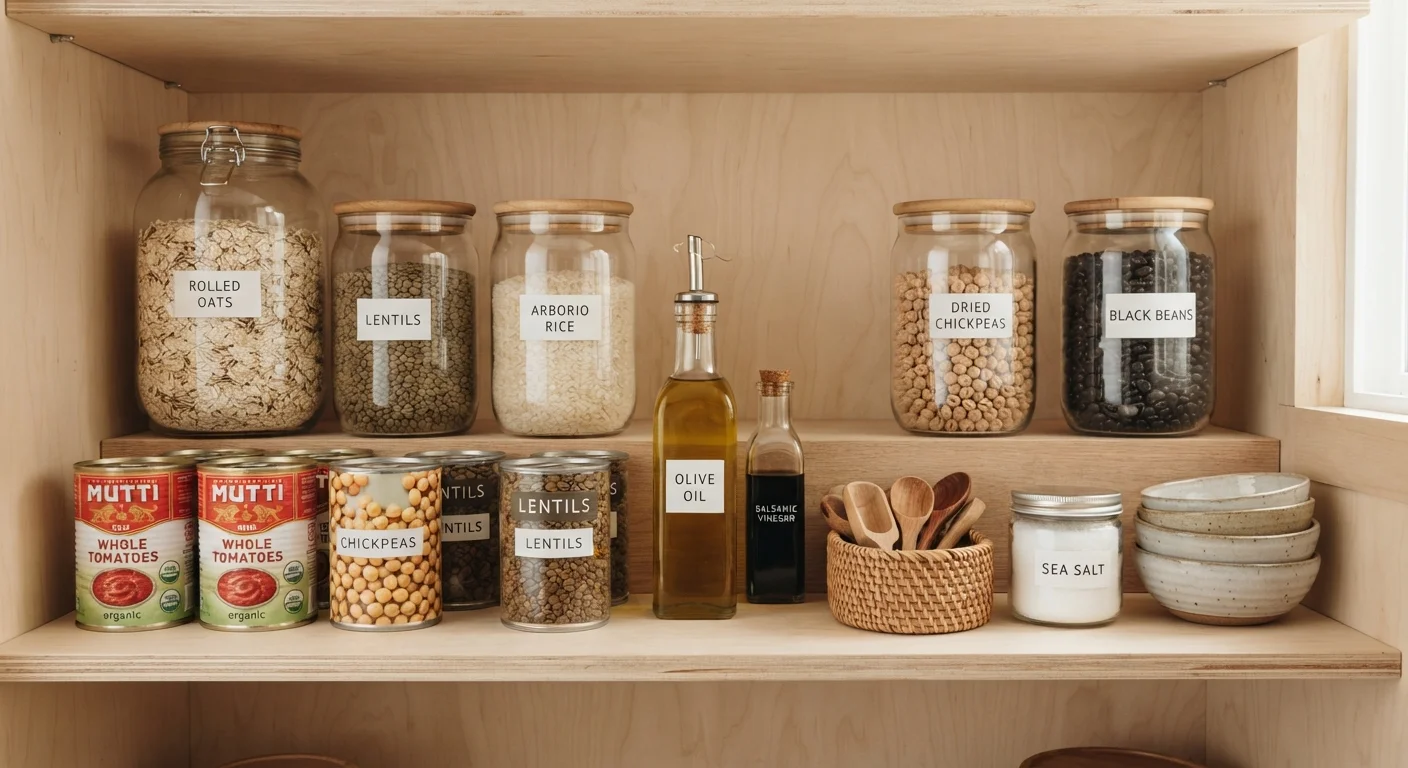
Why your pantry is your food budget's foundation
Fresh groceries rotate in and out of the house every week, but your pantry works differently. The right shelf-stable ingredients sit quietly until you need them, then pull a meal together when the fridge is sparse or the budget is tight. Families who keep a reliable pantry stocked tend to spend less per meal, waste less food, and reach for takeout less often.
If you are new to managing a household food budget, the foundational budgeting guide covers how to track spending and build a realistic weekly plan. For families ready to put pantry staples to work across a full week, the week of dinners on a shoestring gives a concrete meal-by-meal structure.
The staples below were chosen on three criteria: low cost per serving, long shelf life, and genuine versatility across multiple meal types. None of them require special equipment or advanced cooking skill.
Dried lentils
Lentils are one of the few protein sources that cost under $2 per pound and need no soaking before cooking. A one-pound bag yields roughly eight half-cup servings of cooked lentils, putting the cost per serving well under $0.25 in most markets. Red lentils dissolve into soups and curries; green and brown varieties hold their shape in salads and grain bowls.
Because lentils absorb seasoning readily, the same bag can produce a Mexican-spiced soup one night and an Indian dal the next. Stored in a sealed container, dried lentils stay good for up to a year.
A one-pound bag of lentils delivers eight servings of protein for under $2 total.
Canned whole tomatoes
Canned whole tomatoes are one of the few pantry items where the store-brand version performs on par with name brands in most cooking applications. A 28-ounce can typically costs between $1.50 and $2.50 and forms the base of pasta sauces, braised meats, shakshuka, chili, and soups. Crushing them by hand in the can before adding them to the pot gives you more control over texture.
Canned tomatoes also solve a real seasonal problem: fresh tomatoes are expensive and often flavorless outside summer, while canned tomatoes maintain consistent quality year-round because they are packed at peak ripeness.
Canned tomatoes pack consistent flavor year-round at a fraction of the cost of fresh ones in winter.
Long-grain white rice
White rice costs roughly $0.10 to $0.15 per cooked serving when bought in a 5- or 10-pound bag. It stores for years in a sealed container and functions as a neutral base that stretches every protein and vegetable dish further. A pot of rice also absorbs pan drippings and sauces that would otherwise be wasted, which matters when you are working with a tight grocery budget.
Brown rice delivers more fiber and nutrients, though it costs slightly more and has a shorter shelf life. Families who want both options can keep a small bag of brown rice for weekends and a larger bag of white rice for weeknights.
Long-grain white rice costs around $0.10 per serving and stretches every protein dish further.
Dried chickpeas and canned chickpeas
Dried chickpeas are the more economical format: a one-pound bag produces roughly three 15-ounce cans worth of cooked chickpeas at about one-third the cost. They do require an overnight soak and about 90 minutes of cooking, so canned chickpeas are worth keeping on hand too for nights when planning falls short.
Chickpeas work in curries, roasted as a crunchy snack, pureed into hummus, folded into grain salads, or simmered into tomato-based stews. That range of applications across different meal formats makes them one of the most flexible legumes to stock.
One pound of dried chickpeas yields the equivalent of three cans at a fraction of the price.
Rolled oats
Rolled oats cost around $0.10 to $0.15 per serving in a standard canister and well under $0.10 per serving in bulk. They cover breakfast reliably as oatmeal, overnight oats, or baked oatmeal, and they have uses beyond the morning meal: oats bind meatloaf and veggie burgers, thicken soups, and form the base of granola bars and energy bites.
A family that eats oatmeal for breakfast two or three mornings a week can save meaningfully compared to boxed cereals on a per-serving basis. Whole rolled oats, not instant, give the best shelf life and the most flexibility in cooking.
Rolled oats cost under $0.15 per serving and work across breakfast, baking, and savory cooking.
Olive oil or a neutral cooking oil
A cooking oil is the one fat that touches nearly every meal, so buying a size that offers good per-ounce value matters. Olive oil in larger containers (32 to 64 ounces) costs significantly less per ounce than smaller bottles. Canola or vegetable oil is cheaper still and works for high-heat cooking where the flavor of olive oil would be wasted anyway.
Keeping one bottle of each, olive oil for dressings and finishing and a neutral oil for high-heat cooking, gives you the right tool without overspending on premium oil for tasks that do not benefit from it.
Buying cooking oil in larger containers consistently reduces the per-ounce cost.
Low-sodium canned beans (black, kidney, pinto)
Canned beans at $0.80 to $1.20 per can deliver two to three half-cup servings of cooked legumes, typically 6 to 8 grams of protein per serving, and negligible fat. Rotating black beans, kidney beans, and pinto beans keeps the pantry from feeling repetitive: black beans work in tacos and grain bowls, kidney beans go into chili and soups, and pinto beans mash well as a side or burrito filling.
Low-sodium versions let you control the salt level of a dish more precisely, which matters in recipes where canned beans are a major component.
Rotating three types of canned beans keeps weekly meals varied without adding cost.
Pasta (multiple shapes)
Pasta is one of the most calorie-dense shelf-stable foods per dollar spent, and keeping two or three shapes on hand means you can match the pasta to the sauce without a special trip. Thin shapes like spaghetti and linguine work with lighter, oil-based sauces; short shapes like penne or rigatoni hold chunky tomato or meat sauces better.
Store-brand pasta and name-brand pasta are made from the same basic ingredient: semolina flour. The quality difference in most home cooking applications is negligible, and store brands regularly cost 30 to 50 percent less per pound.
Store-brand pasta typically costs 30 to 50 percent less per pound with no meaningful quality difference.
Getting the most from your staple shelf
These ingredients work hardest when you rotate stock consistently, using older cans and bags before newer ones. Buying in larger quantities at warehouse stores or ethnic grocery markets can lower per-unit costs noticeably on items like dried beans, rice, and canned tomatoes, without increasing waste because of the long shelf lives involved.
Buy in bulk only what you will actually use
Bulk pricing saves money only if the food gets eaten before it spoils or goes stale. Before buying a large bag of any staple, confirm your family uses it regularly. Grains and dried legumes with long shelf lives are the safest candidates for bulk purchasing. Oils and whole wheat flours go rancid faster and are better bought in medium-sized quantities.
Combining pantry staples with whatever produce is in season is one of the most reliable ways to keep meal variety high while keeping costs low. A bag of lentils costs roughly the same in January and August, but the vegetables you pair it with will shift considerably, and so will the flavour of the finished dish. The guide to eating well without overspending goes deeper on pairing seasonal produce with pantry staples. For families who also need to manage food costs away from home, the road trip food guide covers pantry-style packing strategies for travel. The beginner meal prep roadmap explains how to batch-cook these staples efficiently on a single prep day to cut weeknight cooking time.
The content provided on our blog site traverses numerous categories, offering readers valuable and practical information. Readers can use the editorial team’s research and data to gain more insights into their topics of interest. However, they are requested not to treat the articles as conclusive. The website team cannot be held responsible for differences in data or inaccuracies found across other platforms. Please also note that the site might also miss out on various schemes and offers available that the readers may find more beneficial than the ones we cover.