

Why road trip food costs spiral without a plan
Food is one of the biggest variable expenses on any family road trip, and unlike lodging or gas, it is easy to underestimate because the spending happens in small increments. A $4 gas station coffee here, a $15 fast food run there, and a sit-down dinner when everyone is too tired to think adds up fast. A family of four eating out for every meal can spend $100 to $150 per day on food alone, depending on location and choices.
The fix is not to eat badly or go hungry. It is to make deliberate decisions before hunger, fatigue, or convenience pressure forces your hand. Families who start with a food budget at home already have the right instincts. Applying the same logic on the road just requires a bit of pre-trip structure.
Set a per-day food target before you leave. A realistic starting point for many families is $40 to $60 per day when combining self-prepared meals with occasional restaurant stops. That number will vary by region and family size, but having a number at all changes behavior.
What to pack before you leave home
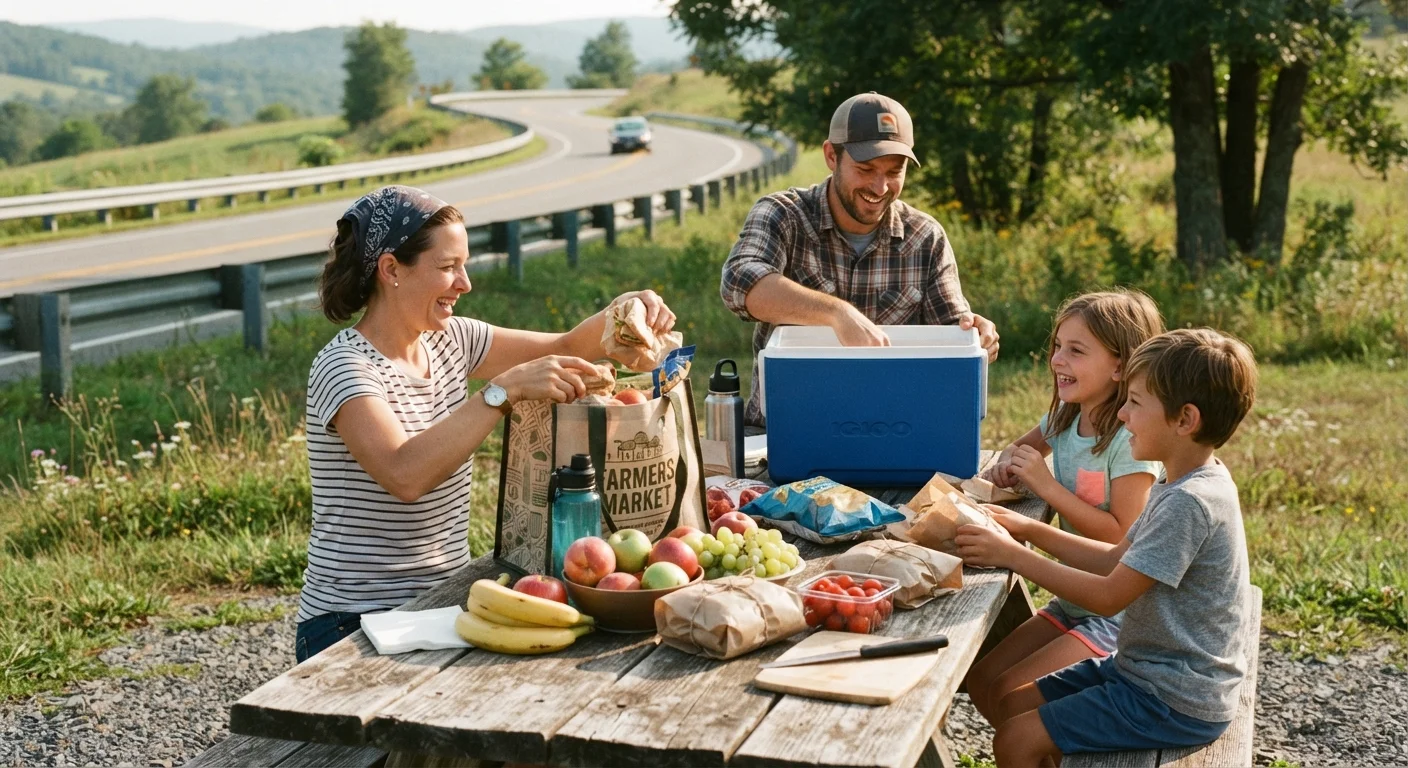
The cooler is your most valuable piece of travel gear for food costs. Pack it with items that work across multiple meals: hard-boiled eggs, sliced cheese, deli meat, cut vegetables, yogurt, and fruit that travels well (apples, grapes, oranges). Add shelf-stable items separately: peanut butter, crackers, nut bars, dried fruit, and single-serving oatmeal packets.
Plan specifically for breakfast and lunch. Those two meals are the easiest to cover without stopping at a restaurant, and together they account for roughly half your daily food spend. Dinner is where most families reasonably choose to sit down, so let that be the flexible meal.
What you will need
For snacks, buy in bulk at home rather than picking up individual packages at convenience stores. The markup on highway snacks is steep. A box of crackers or a bag of trail mix bought before departure costs a fraction of what the same category of item costs at a travel plaza.
If your lodging has a microwave or refrigerator, you can extend this approach to simple hot breakfasts and reheated leftovers. Check accommodation amenities when booking. Families who compare camping versus indoor lodging often find that options with cooking access change the food math considerably.
Using grocery stores as your road trip kitchen
Grocery stores are underused by travelers. A regional chain in almost any US city or town will have a deli counter, rotisserie chicken, pre-made salads, fresh bread, and grab-and-go fruit. These items cost a fraction of a comparable restaurant meal and can be eaten at a park, picnic table, or back at the car.
When you stop for gas or a rest break, look for a grocery store within a half mile. Apps that show nearby stores by category make this easy to plan in real time. Buy for the next 24 hours rather than the whole trip so nothing spoils.
Plan your grocery stop around your route
Before leaving each morning, identify the grocery stores along your planned route using a maps app. Stopping at a store in a residential area rather than a tourist zone typically means lower prices and shorter lines. Buying the next day's food the evening before also removes the pressure of shopping while everyone is hungry.
Store-brand products at grocery chains deliver reliable quality for staples like bread, cheese, peanut butter, and juice. If you are unfamiliar with which categories are worth switching, the store brands vs. name brands breakdown covers it category by category. On a road trip, the savings on a week of groceries can easily cover a full tank of gas.
When eating out is actually worth it
Restaurant meals are not the enemy. The problem is defaulting to them out of exhaustion or lack of preparation, not choosing them deliberately. There are situations where a restaurant meal makes clear sense: it is a destination your family specifically wanted to visit, everyone is genuinely worn down and morale needs a reset, or you are in a place where the local food is part of the experience.
Lunch at a restaurant is almost always cheaper than dinner for the same quality of food. Many restaurants run lunch specials or smaller portions at lower prices. If a sit-down meal is in the plan, shifting it to midday saves money without giving up the experience.
Avoid tourist-trap restaurants immediately adjacent to major attractions. Walk two or three blocks away and prices typically drop. Locals-focused spots near grocery stores, hardware stores, or community centers tend to reflect what residents actually pay, not what visitors are assumed to accept.
Tracking what you spend on food each day takes thirty seconds with a notes app. Families who watch that number in real time make different choices than those who reconcile at the end of the trip. For a broader look at how food spending fits into overall trip planning, annual family travel budget planning covers the full picture across multiple trips.
The content provided on our blog site traverses numerous categories, offering readers valuable and practical information. Readers can use the editorial team’s research and data to gain more insights into their topics of interest. However, they are requested not to treat the articles as conclusive. The website team cannot be held responsible for differences in data or inaccuracies found across other platforms. Please also note that the site might also miss out on various schemes and offers available that the readers may find more beneficial than the ones we cover.