

Our Verdict
Neither camping nor indoor lodging wins outright. Camping is a genuine money-saver for families who already own equipment, travel in larger groups, and can handle weather variability. Indoor lodging is the more practical pick when children are very young, the destination lacks good campgrounds, or the trip is short. Most families benefit from mixing both approaches across different trips rather than committing to one year-round.
| Best for | Recommended |
|---|---|
| Families on a tight per-night budget with existing gear | Camping |
| Trips with toddlers or infants requiring reliable climate control | Indoor lodging |
| Longer stays near national parks or state forests | Camping |
| Urban destinations or trips with packed daily itineraries | Indoor lodging |
What the nightly cost comparison actually looks like
A campsite at a U.S. state park typically runs $15 to $45 per night. A private campground with hookups and amenities can reach $60 to $80. Compare that to a mid-range hotel room, which averages $120 to $200 per night in most family travel corridors, before taxes and resort fees. For a four-night trip, that gap is real money.
The catch is gear. Families camping for the first time often spend $300 to $700 on a tent, sleeping bags, pads, and a cooler before they book a site. That startup cost erases the savings on a first trip and sometimes a second. Families who already own equipment, or who can borrow it, see the financial case for camping right away.
Group size also changes the math. A family of five pays roughly the same campsite fee as a family of two, while hotels charge per room. Two adults and three kids in one campsite versus two hotel rooms is a straightforward win for camping.
| Camping | Indoor lodging | |
|---|---|---|
| Typical nightly cost | $15 to $80 per site | $120 to $200+ per room |
| Upfront investment | $300 to $700+ for gear | Minimal to none |
| Food cost potential | Low (cook your own) | High (restaurant-dependent) |
| Setup and logistics | Significant (setup, breakdown) | Minimal (check-in, check-out) |
| Weather risk | High impact on experience | None |
| Group size savings | Strong (flat site fee) | Weak (per-room pricing) |
| Best destination fit | Parks, forests, rural areas | Cities, short urban trips |
For help accounting for costs that surface later in the planning process, see the hidden costs families miss when budgeting a trip.
Comfort, logistics, and who actually does the work
Indoor lodging removes a layer of planning. You arrive, drop bags, and the climate control, bed, and bathroom are ready. For families with infants, children who need consistent sleep environments, or anyone managing a health condition that requires temperature regulation, that reliability has real value that does not show up in a price comparison.
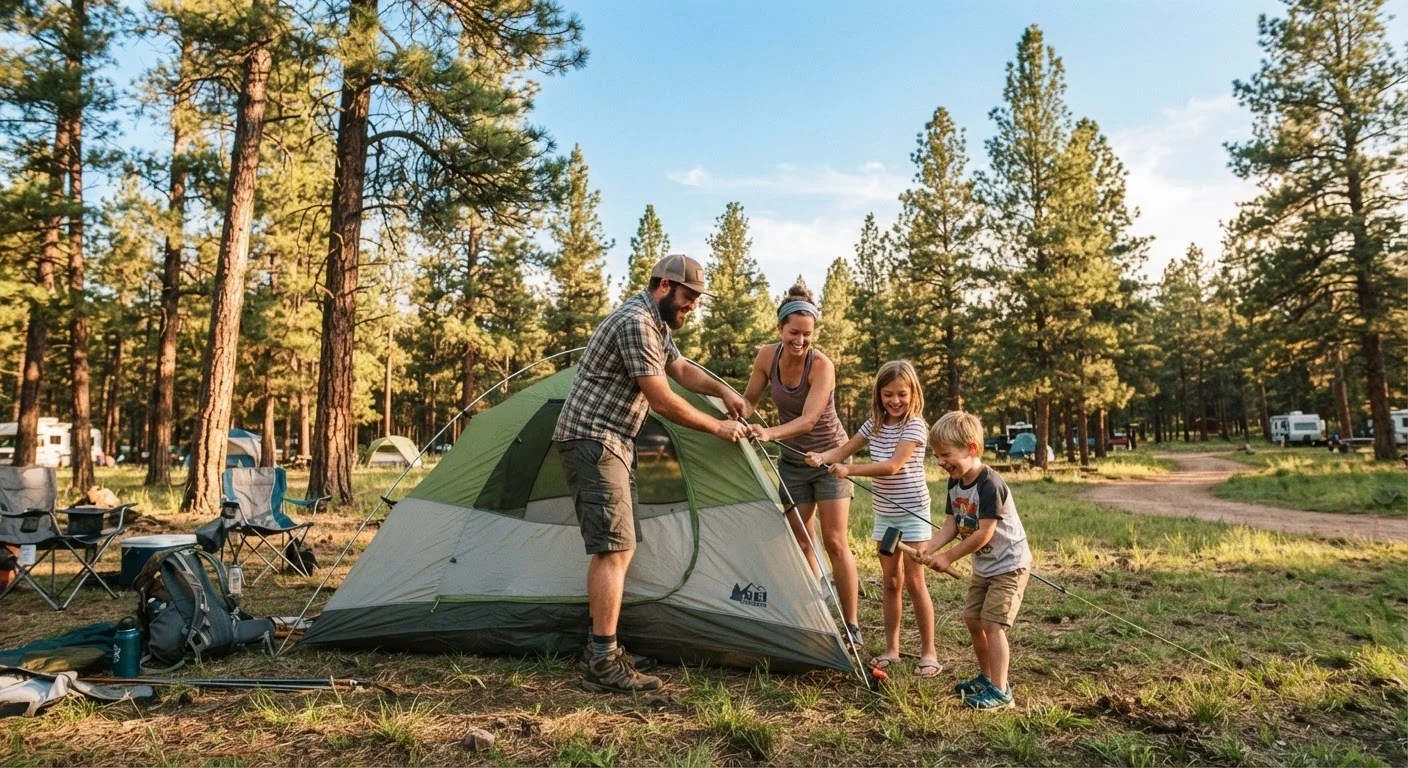
Camping requires setup and breakdown time on both ends of the trip. A family new to tent camping should expect 45 to 90 minutes of pitching and organizing on arrival. Rain changes everything: wet gear, muddy children, and a damp sleeping bag late at night are not hypothetical problems. Weather risk is the most consistently underestimated variable in camping plans.
That said, campground amenities have improved at many state and national park sites. Flush toilets, hot showers, and camp stores are standard at higher-traffic campgrounds. Families should read recent reviews of specific sites rather than assuming primitive conditions.
Food costs: the factor most families overlook
Camping creates a natural incentive to cook your own food, which is where a large portion of family travel spending disappears on hotel-based trips. A family that cooks breakfast and dinner at a campsite and packs lunches can reasonably spend $25 to $40 per day on food for four people. A hotel-based family eating two restaurant meals a day can spend $80 to $150 daily without any extravagance.
That food cost gap sometimes exceeds the lodging cost difference on its own. Families staying in hotels near tourist areas face limited affordable options, while campers control their grocery list from home.
Managing food costs during travel rewards planning regardless of where you sleep, but camping creates structural incentives that hotel stays do not.
Destination fit: not every place suits both options
Some destinations lean one way by nature. National parks and state forests have affordable, well-maintained campgrounds that put families closer to the activities they came for. Paying $30 a night to camp inside a national park and waking up 10 minutes from a trailhead is a materially different experience from staying 45 minutes away at a motel. Planning a national park trip with kids covers the reservation logistics, which matter because popular sites book months in advance.
Urban destinations flip the equation. Campgrounds near major cities are typically far from the actual attractions, require a car for every outing, and add commute time that drains the day. A centrally located hotel or vacation rental often delivers better value in a city context.
Timing also shapes which option is practical. Shoulder-season travel can lower hotel rates considerably while weather risk for camping increases. Traveling off-season covers how price and crowd dynamics shift, and is worth reading before committing to either approach for a fall or spring trip.
Making the call for your specific family
A practical framework: if you own gear, are heading somewhere with good campgrounds, and plan to stay four or more nights, camping will almost certainly cost less and may suit the experience you want. If your children are under three, the trip is two nights or fewer, or the destination is a city, indoor lodging is more practical even at higher cost.
A middle path worth considering is cabin rental. Many state park systems rent cabins with beds and heat for $60 to $100 per night, cutting out gear requirements while keeping costs well below standard hotels. These book out quickly, so early reservations matter.
Families planning multiple trips across a year benefit from treating these as complementary options. Spreading travel costs across a full year can help structure a calendar that mixes a camping trip in summer with a hotel-based trip in a shoulder season, distributing both costs and variety without overextending the household budget.
The content provided on our blog site traverses numerous categories, offering readers valuable and practical information. Readers can use the editorial team’s research and data to gain more insights into their topics of interest. However, they are requested not to treat the articles as conclusive. The website team cannot be held responsible for differences in data or inaccuracies found across other platforms. Please also note that the site might also miss out on various schemes and offers available that the readers may find more beneficial than the ones we cover.