

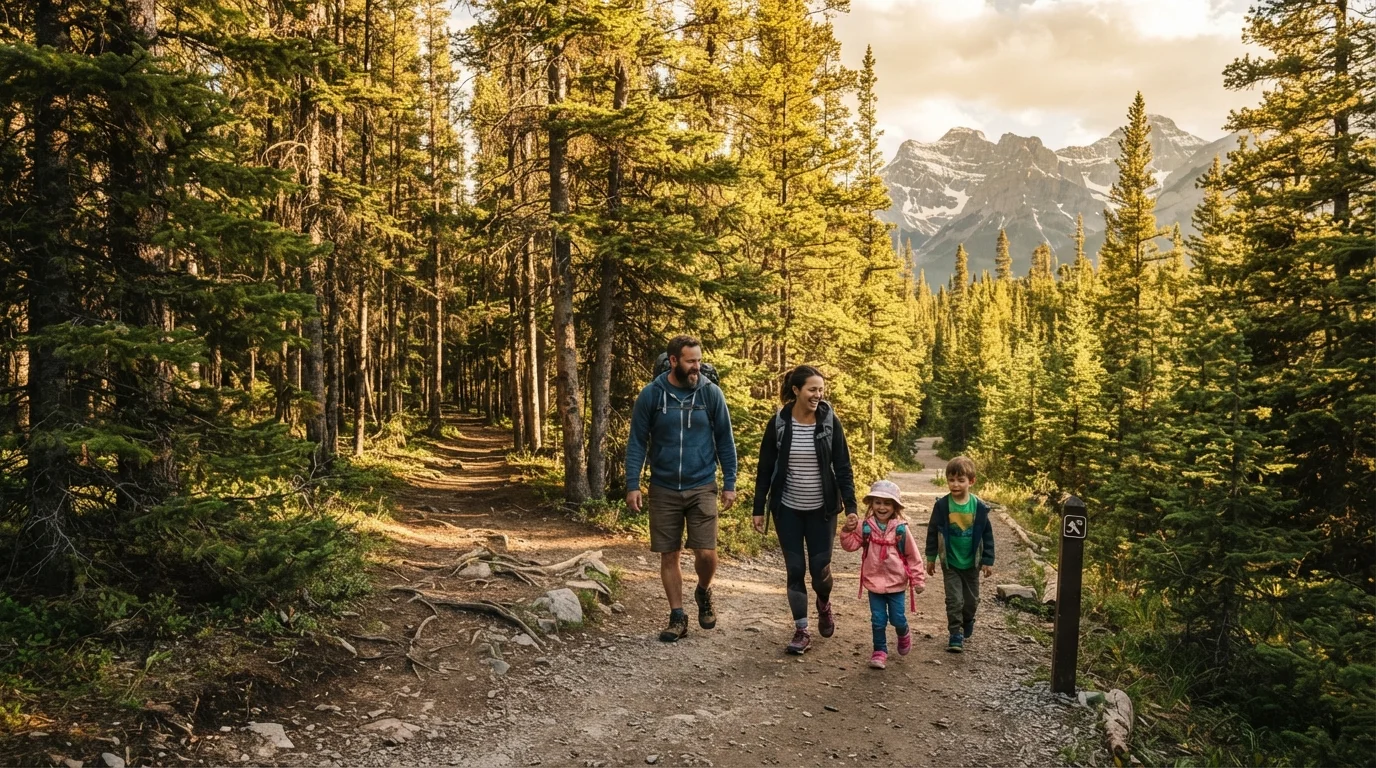
Why national parks work for family budgets
National parks are one of the few travel categories where the core experience costs almost nothing once you are through the gate. Trails, scenic overlooks, ranger programs, and junior ranger activities are free to use. That structure works in a family's favor because the main variable is the entrance fee, and that is controllable.
A single-vehicle entrance fee at popular parks typically runs $20 to $35. For a family making multiple visits in a year, that per-visit cost drops sharply with an annual pass. Compare that to theme park admissions, which can run several hundred dollars for a single day for a family of four, and the math becomes obvious quickly.
The other factor is flexibility. National parks exist in nearly every state, which means many families can drive rather than fly. Road trips cut per-person transportation costs substantially, and the auto ownership cost guidance on this site can help you estimate what your specific vehicle will cost to operate on a longer drive.
Passes, fees, and what they actually cover
The America the Beautiful Annual Pass costs $80 and covers entrance fees for one vehicle (up to four adults) at federally managed lands, including all National Park Service sites, Bureau of Land Management areas, and several other agencies. For any family visiting two or more fee-charging national parks in a year, the pass pays for itself.
Several free pass programs are worth knowing:
- The Every Kid Outdoors pass is free for U.S. fourth graders and admits the child plus accompanying adults in the same vehicle. Applications are at everykidoutdoors.gov.
- Veterans and Gold Star families receive free annual passes through the America the Beautiful program.
- People with permanent disabilities qualify for a free lifetime pass.
Annual fee-free days, when the NPS waives entrance fees at all parks, occur several times per year. Dates change annually, so check the NPS website (nps.gov) for the current schedule before planning around them.
One common budgeting mistake is treating the entrance fee as the only cost. Parking, camping reservations, and permits for backcountry areas or popular day hikes all carry separate charges at many parks. See what families often miss when budgeting for a fuller picture of where extra expenses appear.
Book your campsite reservation the morning the window opens on recreation.gov, not days later. High-demand parks like Yosemite and Glacier release sites on a rolling six-month window, and sites at popular campgrounds can be gone within minutes of release.
Late bookings at the most visited parks almost always result in finding no availability, forcing families into more expensive outside lodging or rescheduling entirely.
Use the NPS app to download park maps and trail guides to your phone before you leave home. The app works offline, which matters because most parks have limited or no cell service in trail areas.
Families who rely on live navigation inside parks frequently get lost or miss trailheads, which adds stress and can create safety issues in remote terrain.
Choosing when to go
Peak season at most U.S. national parks runs from Memorial Day weekend through Labor Day. During that window, campsite reservations fill months out, traffic on park roads can rival urban highways, and any lodging near a park entrance charges peak rates.
Shoulder seasons (April through May and September through October) offer a practical middle ground. Many facilities are still open, temperatures at mid-elevation parks are often more comfortable for hiking with children, and both campsite availability and nearby lodging rates improve. Some parks, particularly in the Southwest, see their most pleasant weather in fall.
The broader case for off-season family travel covers how timing shifts affect more than just cost, but for park visits the most direct benefit is crowd reduction. At heavily visited parks, visiting on a Tuesday in late September rather than a Saturday in July can make the difference between a pleasant hike and a frustrating one.
Lodging options and what each costs
Families have four main options, each with a different cost profile:
- Tent camping inside the park: Typically $20 to $35 per night at developed campgrounds with restrooms and potable water. These fill fast at popular parks; reservations open months in advance on recreation.gov.
- RV or car camping: Costs are similar to tent sites, though hookup sites cost more. Renting an RV adds a rental fee that can negate savings unless the vehicle replaces multiple hotel nights.
- Lodges inside park boundaries: Operated by park concessionaires, these are convenient but not cheap. They frequently sell out a year in advance for peak season.
- Hotels and vacation rentals outside the park: Towns near popular parks can be expensive during peak season. Staying 20 to 40 miles out and commuting in can lower lodging costs, though it adds driving and the associated fuel cost.
The camping versus indoor lodging comparison walks through the full cost and comfort trade-offs in detail, which is worth reading before you book anything.
Feeding your family on the road and in the park
In-park restaurants and snack concessions carry a significant price premium. A family of four buying lunch at a park grill can easily spend $60 to $80. Packing a cooler with sandwich supplies, fruit, and snacks for the full trip is the single most controllable food cost lever available.
Most developed campgrounds have picnic tables and some have fire grates, so cooking simple meals at camp (pasta, eggs, canned beans) is realistic even without much camping experience. For road trip food strategy, the food and drink section of this site has practical guidance on affordable meal planning.
If you do buy food inside the park, the general stores at larger campgrounds tend to be less expensive than sit-down restaurants. Water refill stations are common at visitor centers, so bring reusable bottles rather than buying bottled water throughout the trip.
Accessibility, safety, and trip prep
Most national parks have paved, accessible paths near visitor centers, though backcountry and many trail systems are not wheelchair accessible. The NPS website for each individual park lists specific accessibility features by area. Call the park's visitor center directly if you need precise information before committing to a reservation.
Safety prep for families with children should cover a few basics. Download offline maps before entering the park because cell service is unreliable in most parks. Carry enough water for the entire planned hike (the general guideline used by many park rangers is roughly half a liter per person per hour of moderate activity, though individual needs vary). Tell someone outside your group your intended route and expected return time if you are going beyond a developed area.
Wildlife interactions require specific precautions that vary by park. Bears require food storage in approved canisters or bear boxes at many parks; rangers and park websites specify what is required. Check the NPS page for your destination park well before arrival, and verify any permit requirements, because some high-traffic trails now require timed-entry reservations separate from the park entrance fee. For planning multiple park visits across a year, building a reservation calendar months in advance prevents the most common and costly planning failure: arriving at a park with nowhere to stay.
The content provided on our blog site traverses numerous categories, offering readers valuable and practical information. Readers can use the editorial team’s research and data to gain more insights into their topics of interest. However, they are requested not to treat the articles as conclusive. The website team cannot be held responsible for differences in data or inaccuracies found across other platforms. Please also note that the site might also miss out on various schemes and offers available that the readers may find more beneficial than the ones we cover.