

Why travel budgets fall short
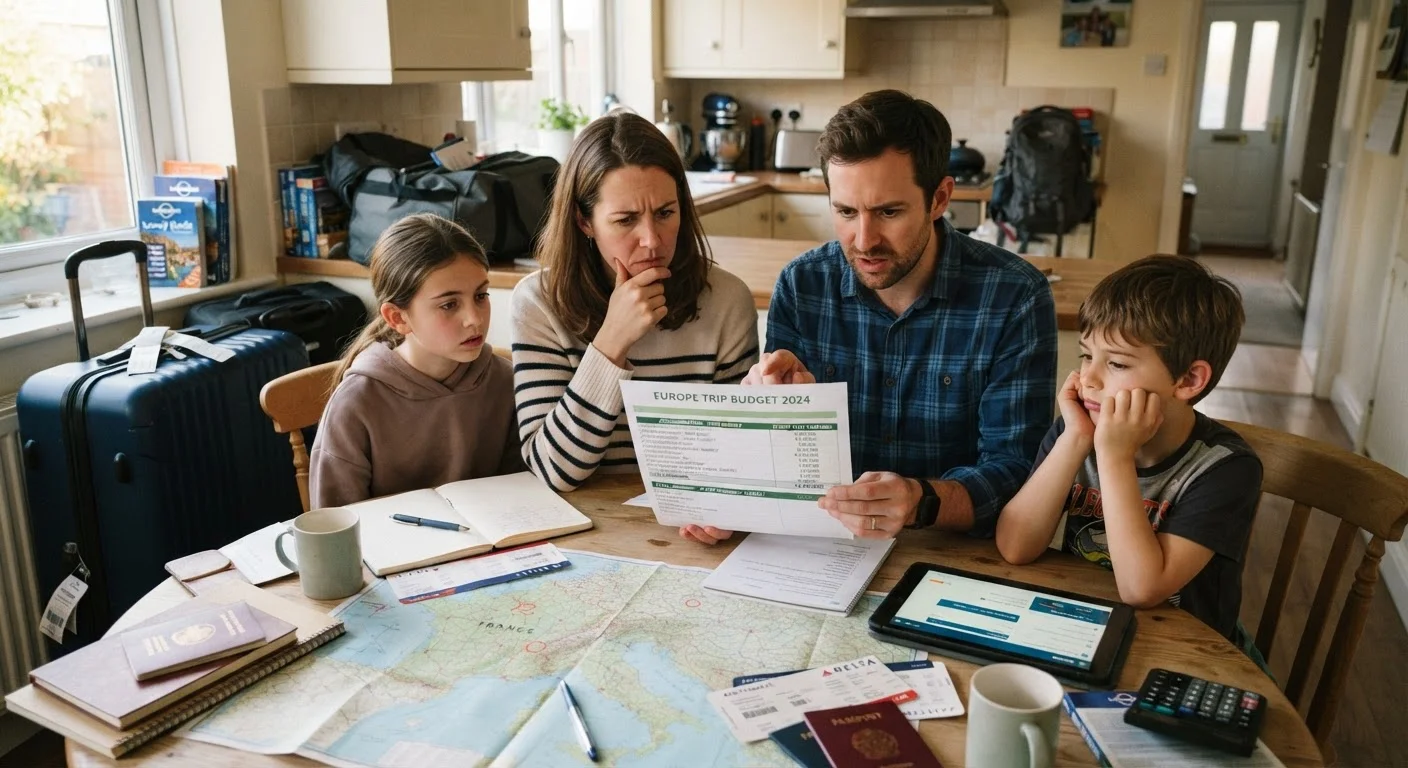
Most families build a trip budget around three numbers: flights, hotel, and car rental. Those are the right categories to start with, but they cover less of the real cost than people assume. The gap between the advertised price and the amount families actually spend is often $300 to $800 or more for a week-long trip, depending on destination and family size.
The problem is not carelessness. It is that the travel industry structures pricing so that base rates look low and add-ons appear later in the booking process or at check-in. Once you are committed to a trip, the friction of backing out is high, so most families absorb the extra costs and revise their mental accounting rather than their actual plans.
Understanding which costs get missed consistently is the first step toward building a budget that actually holds. See our year-round travel budget planning guide for a broader framework on spreading those costs across a full year.
Ignoring resort fees and destination charges at hotels.
Why it happens: Hotel booking sites display room rates prominently and disclose mandatory resort fees in fine print during checkout, or sometimes only at check-in. Families book based on the nightly rate they see in search results.
Forgetting to budget for baggage fees on every flight leg.
Why it happens: Families often calculate baggage costs for the outbound flight but forget that fees apply on the return trip and on any connecting flights operated by a different carrier.
Overlooking airport transportation costs at the destination.
Why it happens: Families focus on getting the best airfare and treat ground transportation as something to figure out later. Rideshare and taxi costs from major airports to city centers or resort areas can be $50 to $120 each way.
Underestimating daily incidental spending.
Why it happens: Incidentals such as sunscreen, over-the-counter medicine, souvenirs, tips, and convenience store stops feel small individually but accumulate over multiple days. Families budget for planned expenses and treat these as trivial.
Skipping travel insurance without understanding the financial exposure.
Why it happens: Travel insurance feels like an optional add-on that adds cost upfront for a benefit that may never be needed. Families under financial pressure drop it to lower the booking total.
Missing the actual total cost of renting a car, including gas and parking.
Why it happens: Car rental advertised rates reflect the base vehicle cost and exclude taxes, liability coverage, and fuel. Families mentally anchor to that base number and are surprised by the final invoice.
The costs that hit hardest for families
Some hidden costs hit harder when you are traveling with children. Seat selection fees on budget airlines can reach $25 to $50 per seat per flight, and families who skip seat selection risk being split across the cabin. For a family of four on a round trip, that is potentially $400 in fees just to sit together. Our guide to flying with kids covers more of these booking-stage surprises.
Food is another consistent underestimation. Airport meals, hotel breakfasts, and restaurant dinners at tourist destinations carry significant markups. A family that spends $80 a day on food at home may spend $200 or more per day on the road without making unusual choices. Our road trip food guide covers practical ways to manage that gap.
All-inclusive resorts are not always all-inclusive
Many all-inclusive packages exclude premium restaurants, water sports, spa services, and off-site excursions. Families who assume everything is covered sometimes spend several hundred dollars in a-la-carte charges during a week-long stay. Read the full inclusions list before booking, not just the marketing summary. Our look at common myths in affordable family travel covers this and other misunderstood budget strategies.
Attraction costs compound quickly with children. Many museum and theme park websites list adult prices prominently, but family totals including child tickets, parking, and meal costs can be two to three times the figure families estimate. Checking the full pricing page, not just the headline rate, before you commit to a destination matters more than most families realize.
Timing the trip well can soften many of these costs. Off-season travel often reduces hotel and attraction prices while also shrinking crowds, which matters for families with young children.
The content provided on our blog site traverses numerous categories, offering readers valuable and practical information. Readers can use the editorial team’s research and data to gain more insights into their topics of interest. However, they are requested not to treat the articles as conclusive. The website team cannot be held responsible for differences in data or inaccuracies found across other platforms. Please also note that the site might also miss out on various schemes and offers available that the readers may find more beneficial than the ones we cover.