

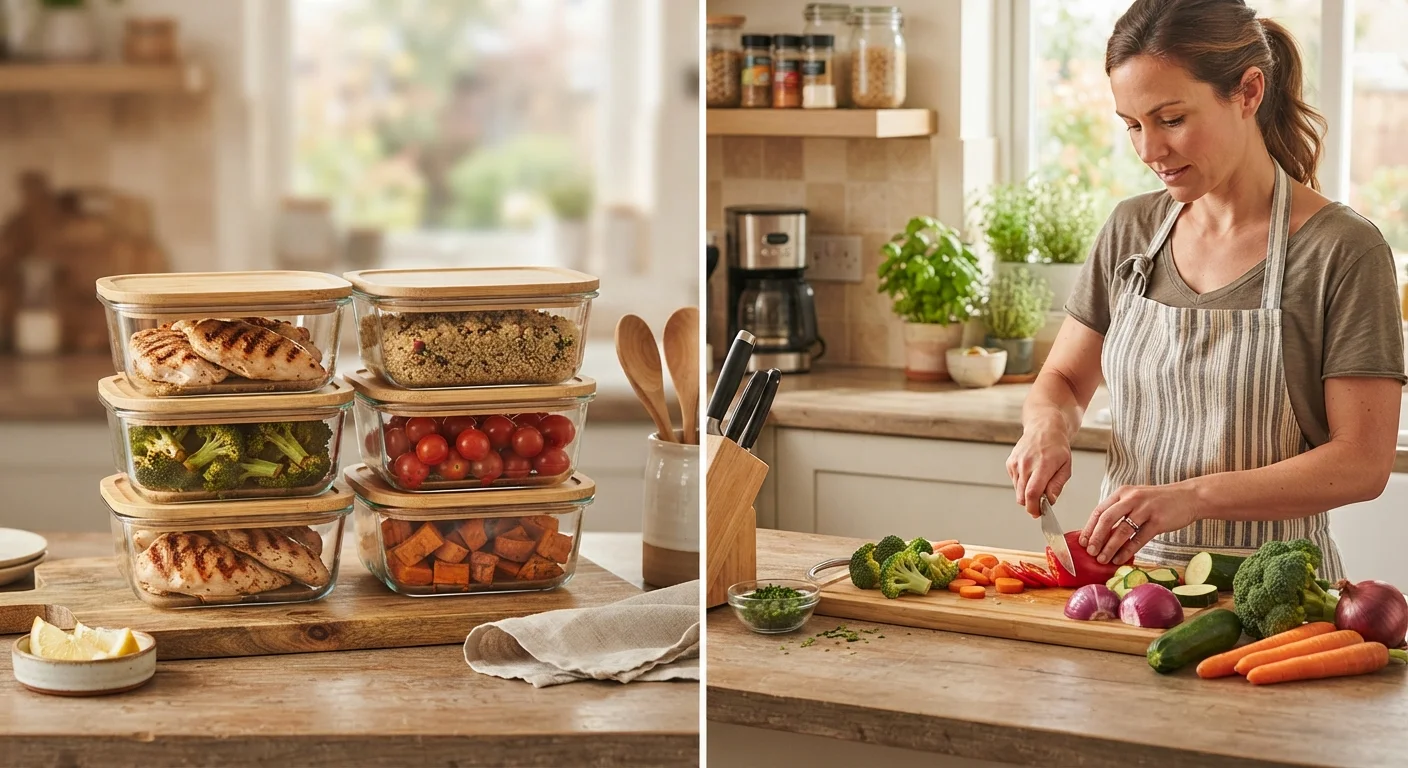
Option A
Bulk cooking (batch cooking)
The time-front approach that trades flexibility for efficiency.
Best for: Families with packed weekday schedules who want predictable meals and lower per-serving costs.
Option B
Cooking fresh every night
The daily approach that prioritizes variety and texture over time savings.
Best for: Families who have at least 30 to 45 minutes most evenings and value freshly made meals.
The real cost difference between the two approaches
Batch cooking lets families buy proteins, grains, and legumes in larger package sizes, which almost always cost less per pound or per ounce than smaller quantities. A family cooking four pounds of ground turkey once a week pays a lower per-pound price than one buying one pound four times. That gap compounds across every ingredient over a month.
Daily cooking is not inherently expensive, but it creates conditions where waste is more likely. A half-used can of coconut milk or a bunch of cilantro bought for one meal and forgotten adds up. The USDA estimates that the average American household wastes between 30 and 40 percent of its food supply, and unplanned daily cooking is a common driver of that waste.
If you want a practical starting point for building a food budget around either approach, this introduction to family food budgeting covers tracking spending and building a realistic weekly plan.
| Criterion | Bulk cooking | Cooking fresh every night |
|---|---|---|
| Average cost per serving | Lower; bulk ingredients cost less | Higher; smaller quantities and more waste |
| Weekly active cooking time | 2 to 3 hours concentrated | 30 to 60 minutes daily |
| Daily weeknight effort | Low; mostly reheating or assembling | Moderate; full prep required each evening |
| Meal variety | Lower without component planning | Higher; different meal each night |
| Food waste risk | Lower with a clear use plan | Higher if plans change mid-week |
| Texture and freshness | Some loss with reheating | Best; nothing is reheated |
| Flexibility for schedule changes | Lower; prepped food must be used | Higher; daily decisions are adaptable |
Time investment: where each method actually costs you
Bulk cooking concentrates time into one or two sessions per week. A two-hour prep session on a weekend can cover five weeknight dinners, meaning the daily cooking window shrinks to reheating or quick assembly. For families with full-time jobs, long commutes, or kids in after-school activities, that trade-off is significant.
Fresh cooking distributes time across every evening. Even a simple 30-minute meal requires that someone is available, has the energy, and has already planned what to cook. On a Tuesday after a long workday, that 30 minutes can feel much longer. The hidden cost of daily cooking is decision fatigue: figuring out what to make is itself a recurring task.
A week of planned dinners on a tight budget can work with either approach, but pairing planning with batch prep removes the daily decision entirely.
Nutrition and food quality: what the research actually shows
Freshly cooked vegetables retain more water-soluble vitamins, particularly vitamin C and some B vitamins, than reheated ones. That is a real difference, though it is smaller than it sounds for most family diets: roasted vegetables eaten the next day still carry significant nutritional value, and proteins and whole grains hold up very well after refrigeration or freezing.
The bigger nutritional variable is not freshness but what actually gets eaten. A batch-cooked lentil soup eaten on Wednesday beats a fresh meal that runs late and gets replaced by fast food. Practical factors, time pressure, availability of ingredients, and family buy-in, shape nutrition outcomes more than the cooking method alone.
For families thinking about how meal strategy connects to broader eating goals, eating well without overspending at the grocery store covers how pantry staples and seasonal produce fit into the picture.
A middle path: component cooking
Most families do not have to choose one method completely. Component cooking, preparing base ingredients in bulk but assembling meals fresh, captures the cost and time benefits of batch cooking without the monotony of eating the same complete dish four nights in a row.
In practice, this means cooking a large pot of brown rice, roasting two trays of vegetables, and browning a batch of ground meat on Sunday. On Monday those components become a rice bowl. On Tuesday they become stuffed peppers. On Wednesday the meat and vegetables go into a pasta sauce. The components are the same; the meals feel different.
If your family is new to this kind of approach, a beginner's roadmap to family meal prep walks through portioning, storage, and how to build a prep routine that fits a real schedule.
Storage safety note: cooked food must be cooled to below 40 degrees F within two hours and used within three to four days when refrigerated, or frozen promptly. Labeling containers with dates takes 10 seconds and prevents guesswork.
The content provided on our blog site traverses numerous categories, offering readers valuable and practical information. Readers can use the editorial team’s research and data to gain more insights into their topics of interest. However, they are requested not to treat the articles as conclusive. The website team cannot be held responsible for differences in data or inaccuracies found across other platforms. Please also note that the site might also miss out on various schemes and offers available that the readers may find more beneficial than the ones we cover.