

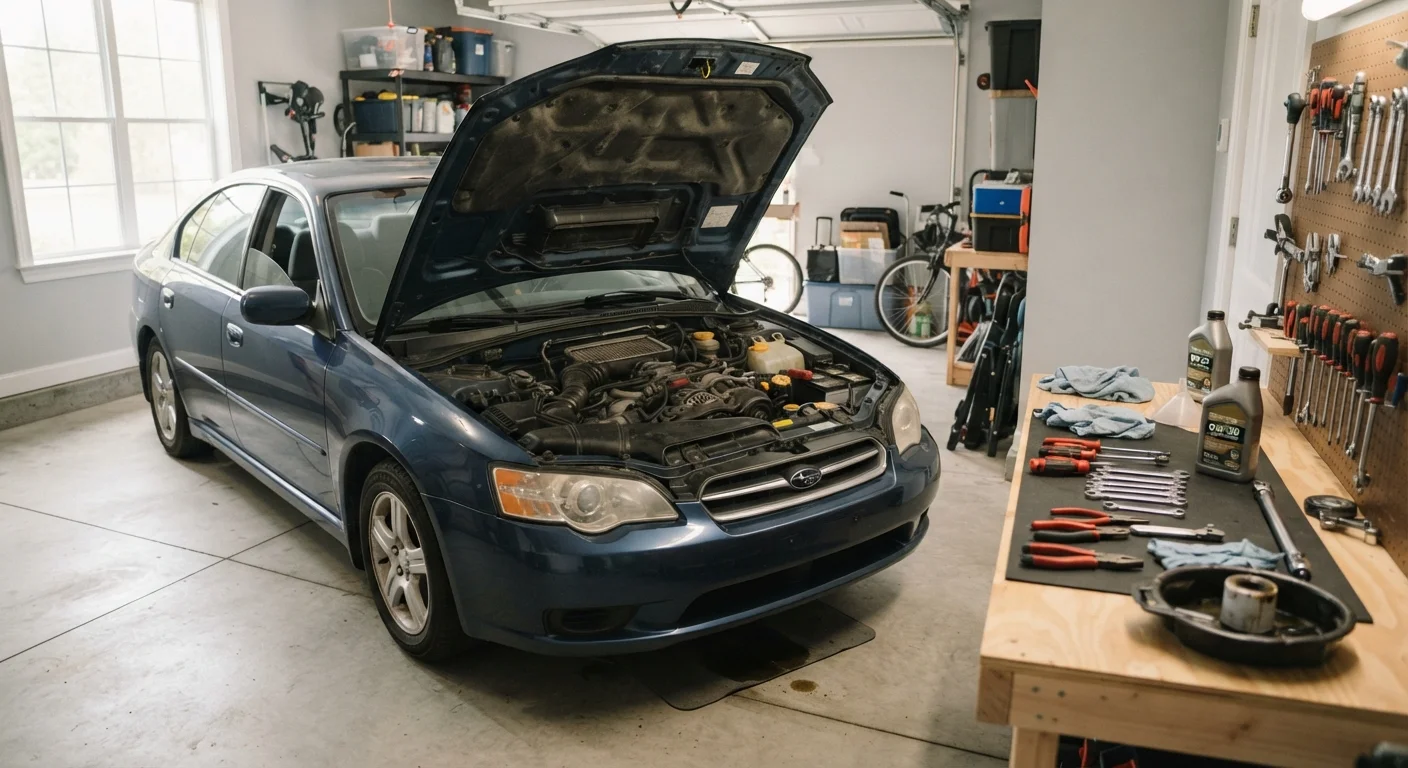
Why skipping maintenance costs more in the long run
A missed oil change or an ignored tire rotation rarely causes an immediate problem, which is exactly why they are easy to skip. But deferred maintenance compounds. A car that goes too long between oil changes can develop sludge in the engine, which shortens engine life significantly and can lead to a repair bill that dwarfs years of oil change costs combined.
The math is straightforward. Routine maintenance has a predictable, modest cost. Reactive repairs are unpredictable and often expensive. Families who treat their vehicle budget as fixed tend to absorb the shock of a big repair worse than families who budget a small amount monthly for upkeep. Comparing new and used car costs over five years shows how maintenance expenses fit into the bigger picture of vehicle ownership costs.
The goal is not perfection. It is consistency. A car that receives adequate, timely care will almost always outlast one that receives occasional intensive attention with long gaps of neglect in between.
Core habits that protect the most expensive components
Most catastrophic car repairs involve the engine, transmission, or cooling system. All three respond well to basic, scheduled maintenance.
Change engine oil and filter on the schedule in your owner's manual.
Clean oil lubricates engine parts and carries away heat and contaminants. Oil that has broken down loses both properties, accelerating wear on components that cost thousands to replace.
Check and top off all fluids at least once a month.
Coolant, brake fluid, power steering fluid, and windshield washer fluid each protect a specific system. Low coolant can cause overheating; low brake fluid may indicate a leak that needs immediate attention.
Have the air filter inspected at each oil change and replaced when dirty.
A clogged air filter restricts airflow to the engine, which can reduce fuel efficiency and increase engine strain over time. Filters are inexpensive; the engine wear from a prolonged clog is not.
Service the transmission fluid according to the manufacturer's interval.
Transmission fluid degrades with heat and use. Old fluid loses its ability to protect the transmission's internal components, leading to friction and wear that cause expensive failures.
Inspect belts and hoses during routine service and replace them before they fail.
Serpentine belts and coolant hoses degrade with age and heat. A broken serpentine belt can disable the alternator, power steering, and water pump simultaneously, leaving a family stranded.
Transmission fluid is one of the most overlooked items in a family car. Many drivers do not realize it needs to be changed at all. Yet degraded transmission fluid causes wear that, over time, results in slipping gears or total transmission failure, a repair that can cost several thousand dollars. The owner's manual specifies the interval; following it is the simplest form of protection available.
It is also worth knowing which maintenance myths may be sending you to the shop unnecessarily. Common car maintenance myths that cost families money covers persistent misconceptions that lead to wasted spending.
Tire and brake habits that prevent safety issues and save money
Tires and brakes are where safety and cost overlap most clearly. Underinflated tires wear unevenly, reduce fuel economy, and can fail at highway speeds. Checking tire pressure monthly takes about two minutes and costs nothing beyond an inexpensive gauge.
Brake pads have a wear indicator that produces a high-pitched squeal when the pad material gets thin. Addressing that sound promptly means replacing pads, which is a modest expense. Ignoring it until the metal grinds on the rotor means replacing both pads and rotors, which costs considerably more. Listening to the car is one of the most useful maintenance habits available to any driver.
Rotating tires on schedule, typically every 5,000 to 7,500 miles for most vehicles, distributes wear evenly and extends the life of the full set. Since tires are a significant purchase, getting more miles from a set before replacement is a meaningful saving for a family budget.
Keeping records and staying ahead of the schedule
A maintenance log does not need to be complicated. A small notebook in the glove box, or a note on a phone, with the date, mileage, and service performed is enough. That record helps in several ways. It shows which services are coming due, makes it easier to identify recurring problems, and provides documented evidence of upkeep if the vehicle is sold.
The owner's manual is the most reliable guide to service intervals. It is written for that specific engine and drivetrain, not for a general audience. Many drivers follow interval recommendations from shops that are more conservative than the manufacturer requires, which leads to unnecessary spending. Separating fact from fiction on oil change intervals can help calibrate how often service is actually needed.
The same discipline that extends a car's life applies to other household equipment. Care habits that extend device life follows the same logic: consistent, scheduled attention costs less than reactive replacement. For families managing multiple budgets, that pattern compounds into real savings across several categories.
The content provided on our blog site traverses numerous categories, offering readers valuable and practical information. Readers can use the editorial team’s research and data to gain more insights into their topics of interest. However, they are requested not to treat the articles as conclusive. The website team cannot be held responsible for differences in data or inaccuracies found across other platforms. Please also note that the site might also miss out on various schemes and offers available that the readers may find more beneficial than the ones we cover.