

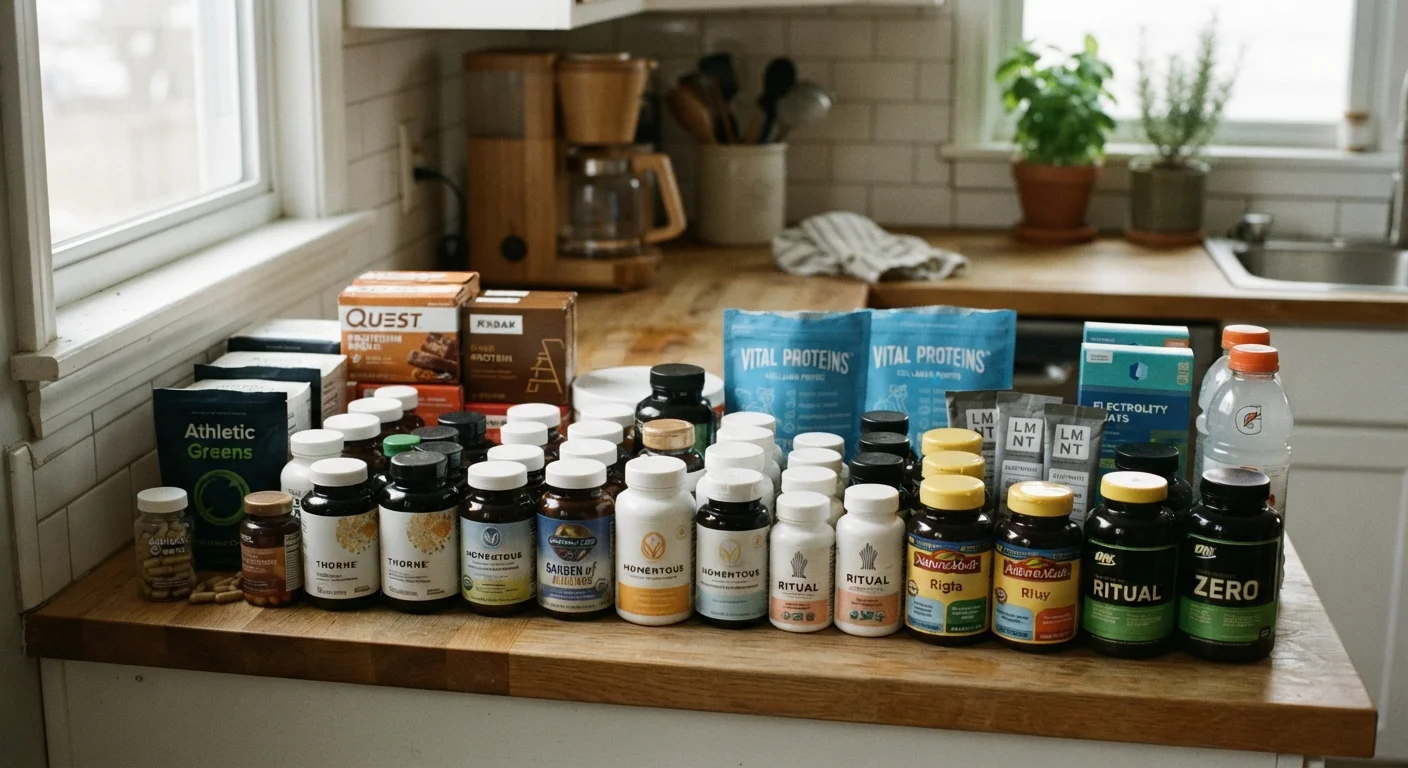
Why families spend more than they realise on health
Health spending rarely feels wasteful in the moment. A bottle of vitamins at the checkout, a sports drink after soccer practice, a gym membership signed in January: each purchase seems reasonable on its own. Over a year, though, these small decisions add up to a surprisingly large line item in the household budget.
What makes this category hard to audit is that health spending carries a sense of virtue. Families feel they are doing the right thing by their kids, and that feeling discourages scrutiny. The result is a collection of habits that persist not because they are working but because nobody has stopped to check. Keeping a family fit on a tight budget is genuinely possible, but it requires looking honestly at where the money currently goes.
This article is for general informational purposes only and is not medical advice. Consult a qualified healthcare professional before making changes to any supplement, diet, or fitness routine.
Common mistakes families make with health spending
The habits below are widespread precisely because they feel sensible. Each one has a straightforward, lower-cost alternative that families can consider with guidance from their healthcare provider.
Buying supplements the family does not need.
Why it happens: Supplement marketing is pervasive, and the products are sold in grocery stores alongside ordinary food, which makes them feel routine. Parents often purchase them out of general concern rather than a confirmed deficiency.
Giving children sports drinks as a regular hydration habit.
Why it happens: Sports drinks are heavily marketed around youth athletics, and parents associate them with performance and recovery. They are also convenient and come in flavors kids prefer.
Paying for a gym membership the family rarely uses.
Why it happens: Memberships feel like a commitment to health, so families sign up with good intentions. Usage tends to fall off after the first few weeks, but the monthly charge continues automatically.
Purchasing "health" snacks and drinks at a premium without checking ingredients.
Why it happens: Labels using words like "natural," "wellness," or "functional" suggest a health benefit, and parents are willing to pay more when they believe a product supports their family's wellbeing.
Rebuying fitness equipment that goes unused after the first month.
Why it happens: Home fitness gear is often bought during a period of high motivation. Once novelty fades or schedules tighten, it sits idle, and families may purchase new items during the next motivational spike.
$35B+
Annual US dietary supplement market size
The U.S. dietary supplement industry generates over $35 billion annually, according to figures cited by the National Institutes of Health Office of Dietary Supplements.
67%
Adults who report low gym attendance
A report from the International Health, Racquet and Sportsclub Association has noted that a substantial majority of gym members use their membership infrequently or not at all after the initial sign-up period.
Building a leaner, smarter health routine
Cutting health spending does not mean cutting health. Whole foods bought in season cost less than most supplements and deliver nutrients in forms the body uses well. Tap water with a slice of fruit costs almost nothing compared with sports drinks and hydrates just as effectively for ordinary daily activity. Free community resources, including parks, school tracks, and library fitness programs, cover a surprising amount of what paid memberships promise.
A useful annual exercise is to list every recurring health purchase and ask one question for each: what specific, measurable benefit does this provide? If the answer is vague, that item is worth discussing with a doctor or registered dietitian before renewing it. Eating well as a family without overspending covers how smart pantry planning and seasonal produce can support good nutrition at a lower cost. For a broader look at where food dollars disappear, where family food budgets break down walks through the most common patterns and practical corrections.
The goal is not to strip every health product from the household but to make sure each one earns its place in the budget with a clear, credible reason.
The content provided on our blog site traverses numerous categories, offering readers valuable and practical information. Readers can use the editorial team’s research and data to gain more insights into their topics of interest. However, they are requested not to treat the articles as conclusive. The website team cannot be held responsible for differences in data or inaccuracies found across other platforms. Please also note that the site might also miss out on various schemes and offers available that the readers may find more beneficial than the ones we cover.