

What you need before you start
Before moving furniture or ordering equipment, assess the space you have available. A 6-foot by 6-foot area is enough for bodyweight exercises, stretching, and light resistance training. A garage bay, a bedroom corner, a basement section, or even a cleared living room wall all work. The floor surface matters: hardwood, tile, and concrete all benefit from a protective mat.
Think about what kinds of exercise your household will actually do. Cardio-focused routines need a bit more open floor. Strength training with free weights needs stable flooring and a wall nearby for balance work. Mixing both is possible in the same footprint with some planning.
If you are weighing whether a home setup makes financial sense compared with a gym, the cost comparison between gym memberships and home workouts is worth reviewing before you spend anything.
What you will need
Choosing and setting up your space
Clear the area completely before placing anything. Measure twice: account for the full range of motion you will use, including arm extensions overhead and lying flat on the floor. Mark the boundaries with painter's tape if you share the space with other household activities.
Lay down floor protection
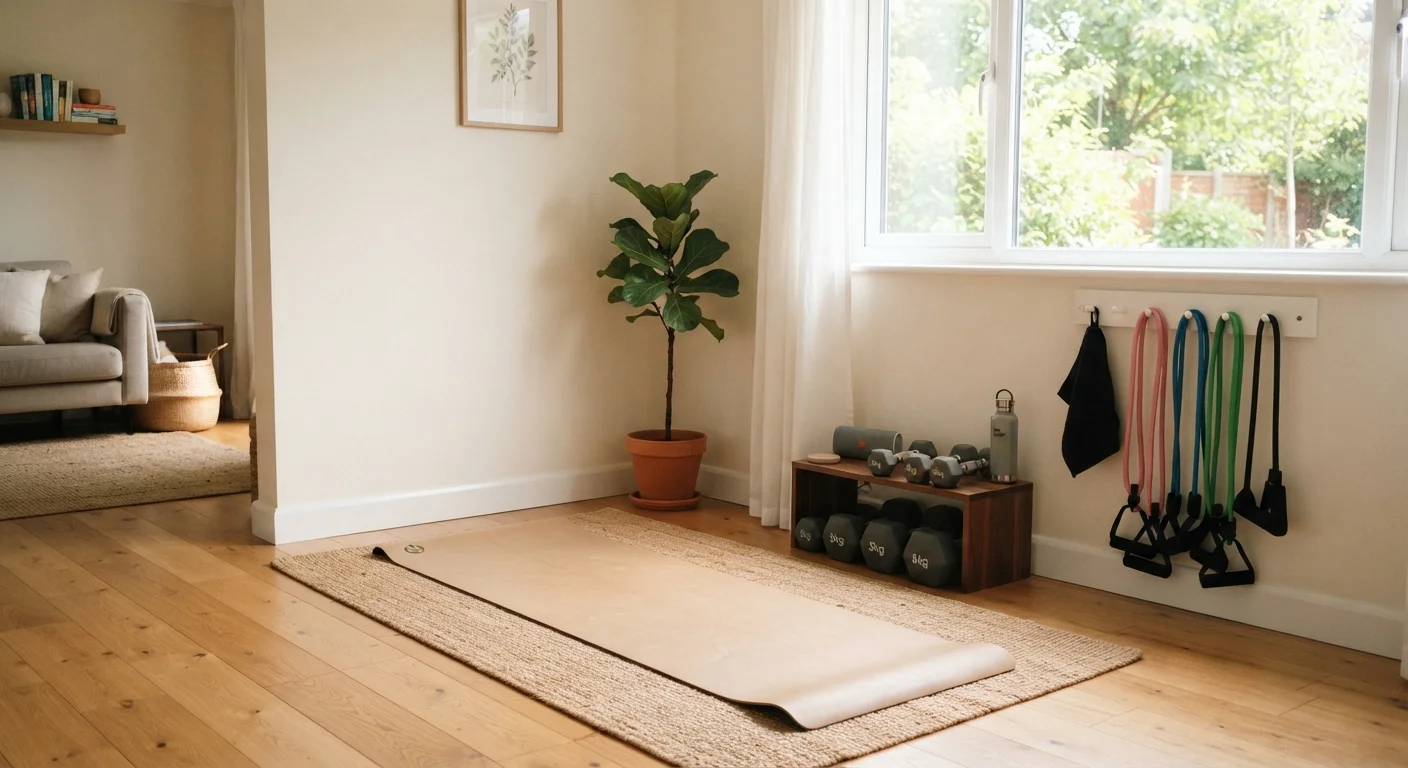
Place an exercise mat or interlocking foam tiles over the workout area. Foam tiles (typically sold in packs) cover larger spaces and protect both your joints and hard floors from dropped weights. A single yoga mat works for stretching and bodyweight work but is too narrow for full lateral movement.
Organize storage within the footprint
Keep equipment inside the workout zone so nothing has to be moved in and out each session. A wall-mounted hook strip holds resistance bands and jump ropes. A small crate or a repurposed milk crate on the floor stores dumbbells or a kettlebell. The goal is to remove any setup friction that might discourage a workout.
Ensure adequate lighting and ventilation
Poor lighting increases the risk of tripping or losing footing mid-exercise. If overhead lighting is dim, a clip-on work light or a floor lamp positioned outside the movement zone improves visibility. For ventilation, a box fan directed across the space is sufficient in most rooms and costs far less than an HVAC upgrade.
Set up a free workout plan
Download a no-cost fitness app or bookmark a reputable video channel before your first session. Having a written or screen-based plan removes the guesswork and makes each session more consistent. Many apps allow you to filter by available equipment, workout duration, and fitness level, which is useful when you have a minimal setup.
Test the space with a full workout before adding anything
Run through a complete session before purchasing additional equipment. Note where you feel restricted, what movements need more floor space, and whether the lighting is sufficient during all exercises. This prevents spending on gear that does not actually improve the setup.
For families with children who also need activity time, the ideas for keeping kids active at low cost can help you think about whether the space can serve double duty.
Keeping costs low without sacrificing function
The most common mistake is buying too much too soon. Start with a mat, one or two resistance bands, and a jump rope. Those three items cover warm-ups, full-body strength circuits, and cardio at a fraction of the cost of machines. Add a set of adjustable dumbbells or a kettlebell only after you have established a consistent routine and know you will use them.
Secondhand sources, including online marketplaces, library of things programs, and neighborhood swap groups, regularly list lightly used weights, benches, and foam rollers. Inspect items in person when possible, check for cracks or wear, and verify that adjustable equipment locks securely before buying. For broader budget fitness strategies your whole family can use, see practical low-cost fitness strategies for families.
Free workout content on video platforms and no-cost fitness apps cover programming for every level. You do not need to pay for classes or a trainer to follow a structured plan. Many public libraries also provide free access to wellness apps and streaming fitness programs through digital lending services.
This article is for general informational purposes only and is not medical advice. Consult a qualified healthcare professional before starting a new exercise program, particularly if you have an existing health condition or injury.
The content provided on our blog site traverses numerous categories, offering readers valuable and practical information. Readers can use the editorial team’s research and data to gain more insights into their topics of interest. However, they are requested not to treat the articles as conclusive. The website team cannot be held responsible for differences in data or inaccuracies found across other platforms. Please also note that the site might also miss out on various schemes and offers available that the readers may find more beneficial than the ones we cover.