

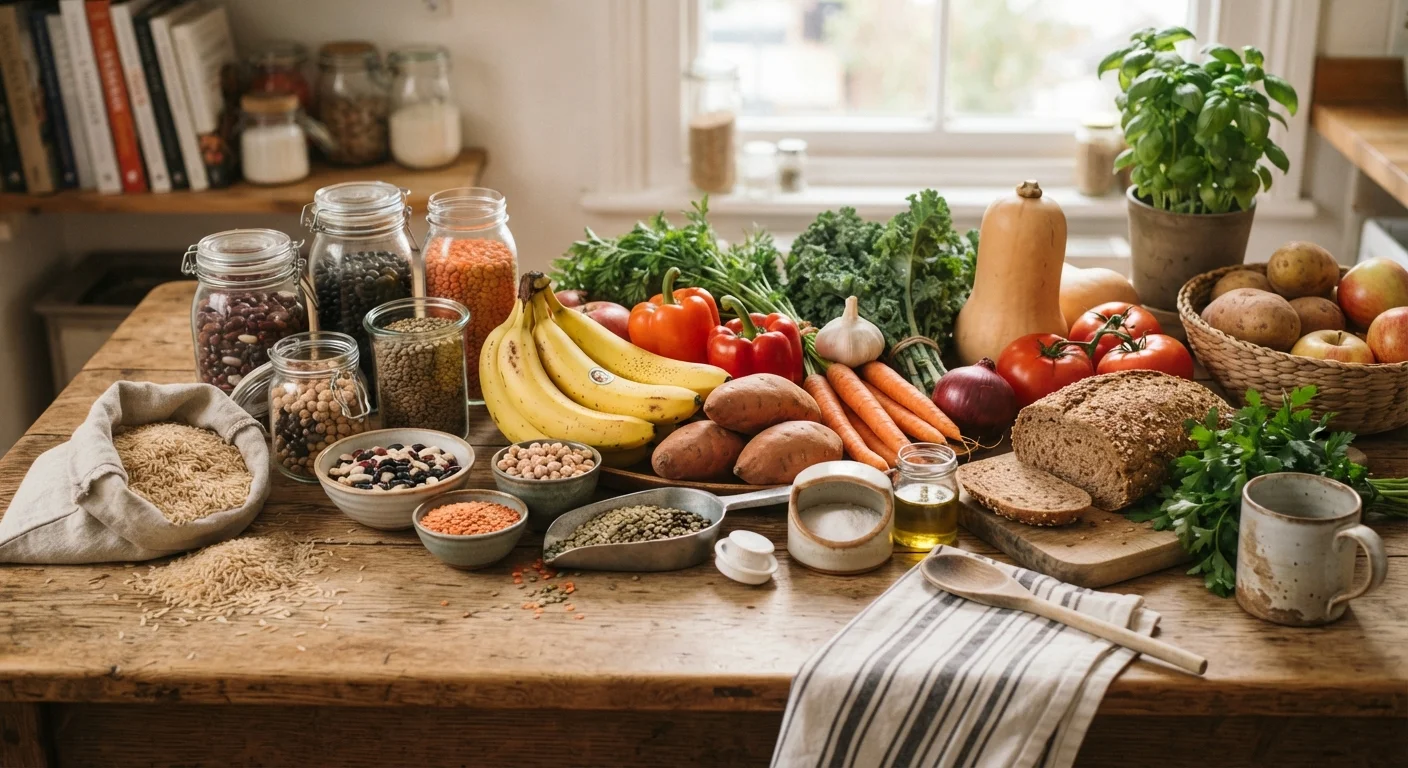
The assumption that ties cost to nutrition
The belief that cheap food is unhealthy food runs deep in American grocery culture. It shapes purchasing decisions, fuels guilt around budget shopping, and leads many families to assume that eating well is simply out of financial reach. That assumption deserves a closer look, because the evidence behind it is more complicated than the common story suggests.
Some of the most nutrient-dense foods in any grocery store also happen to be among the least expensive. Dried legumes, canned fish, eggs, oats, and frozen vegetables all fall into this category. The problem is not that nutritious food is inherently expensive; it is that ultra-processed snack foods and convenience items are heavily marketed and widely visible, which makes them feel synonymous with budget eating. They are not the same thing.
For families trying to eat well on a tight grocery budget, sorting myth from reality here is practical. See how smart pantry planning supports both nutrition and savings for concrete steps once the misconceptions are out of the way.
Myth
Healthy food always costs more than cheap, filling alternatives.
Fact
Several of the most nutrient-dense foods, including dried beans, oats, eggs, and frozen vegetables, are among the lowest-cost items in any grocery store.
Cost comparisons that focus on premium organic produce or specialty health foods will always find a price gap. But standard nutritious staples do not carry that premium. Dried lentils, canned tomatoes, brown rice, and frozen spinach are affordable in every major grocery chain. The perception of high cost is partly driven by which products get prominent shelf placement and advertising spend, not by the actual price tags on whole foods.
Myth
Frozen and canned vegetables are nutritionally inferior to fresh.
Fact
Frozen and canned vegetables retain most of their nutrients and are a practical, affordable alternative to fresh produce for many families.
Fresh vegetables begin losing some nutrients as soon as they are harvested. Frozen products are typically processed within hours of picking, which locks in vitamins and minerals. Canned vegetables do lose some heat-sensitive nutrients during processing, but they still contribute fiber, minerals, and other compounds to a family's diet. Rinsing canned vegetables reduces added sodium significantly, addressing one of the main concerns about them.
Myth
Store-brand and generic foods are lower quality than name brands.
Fact
Store-brand products often come from the same manufacturers as name brands and must meet the same regulatory standards.
Federal food safety and labeling regulations apply equally to store brands and national brands. For staple items like canned beans, pasta, oats, and frozen vegetables, the nutritional profiles are nearly identical. The price difference reflects marketing and packaging costs, not ingredient quality. Switching to store brands on pantry staples is one of the most reliable ways to reduce a grocery bill without changing what ends up on the plate.
Myth
Processed convenience foods are the most affordable option for busy families.
Fact
Home-cooked meals built on whole-food staples generally cost less per serving than packaged convenience foods, even after accounting for time.
Convenience foods carry a markup for packaging, processing, and shelf life. A box of flavored rice mix, for example, costs more per serving than plain rice combined with simple pantry spices. The time savings are real, but families can close that gap with batch cooking and simple recipes that rely on inexpensive staples. Preparing a large pot of soup or a grain-and-bean dish once or twice a week provides multiple meals at a fraction of the per-serving cost of packaged alternatives.
Myth
Eating on a tight budget means accepting poor nutrition as unavoidable.
Fact
Budget constraints shape food choices, but whole-food staples make genuinely nutritious eating possible at almost any grocery budget.
Structural factors including food access, time, and kitchen equipment do affect what families can realistically prepare. Those are real barriers, and acknowledging them matters. However, within the range of options available at a typical US grocery store, nutritious choices exist at nearly every price point. Eggs, oats, dried or canned legumes, seasonal produce, and frozen vegetables collectively cover most nutritional needs at low cost. The narrative that budget eating is inevitably poor eating overstates the constraint and can lead families to stop looking for affordable whole-food options.
What the evidence actually shows
Cost-per-serving math changes the picture significantly. A pound of dried black beans typically costs under two dollars and yields roughly six to seven servings, each with substantial protein, fiber, and iron. A bag of name-brand potato chips costs more per serving and delivers far less nutritional value. The comparison is not about deprivation; it is about where the actual value sits on the shelf.
Frozen produce is another area where the budget-versus-nutrition tradeoff largely disappears. Vegetables and fruits are usually frozen shortly after harvest, which preserves most water-soluble vitamins. Studies published in peer-reviewed nutrition journals have found that frozen spinach, peas, and broccoli compare well to their fresh counterparts on several nutrient measures, sometimes favorably when fresh produce has spent days in transit and storage.
The myth that eating cheaply means eating unhealthily also tends to ignore the role of cooking method and portion. A whole chicken bought affordably and roasted at home produces multiple meals. The same budget spent on drive-through meals delivers fewer nutrients, more sodium, and no leftovers. The evidence on food prices and nutrition points in the same direction: processing and packaging drive up cost without improving nutritional quality.
Families who want to extend this thinking to other spending categories may find it useful to examine which everyday health habits drain the budget without clear benefit.
The content provided on our blog site traverses numerous categories, offering readers valuable and practical information. Readers can use the editorial team’s research and data to gain more insights into their topics of interest. However, they are requested not to treat the articles as conclusive. The website team cannot be held responsible for differences in data or inaccuracies found across other platforms. Please also note that the site might also miss out on various schemes and offers available that the readers may find more beneficial than the ones we cover.