

Summary
28 items · 45 to 90 minutes on-site
Why this checklist matters before you sign
Used cars carry no guarantee of condition, and sellers have no legal obligation to disclose every flaw. A structured walkthrough shifts the balance: you arrive prepared, you spot problems early, and you have concrete evidence to negotiate with or walk away from. This checklist works whether you are buying from a private seller or a dealer lot.
If you are still weighing whether a used vehicle makes financial sense for your family, see what families actually save over five years before you start shopping. And for a full picture of the buying process from budget-setting to paperwork, the first-timer's complete walkthrough covers every step around this inspection.
Run through each group below in order. Skipping sections because a car looks clean is how buyers end up with expensive surprises.
Flashlight
Illuminates dark areas of the engine bay, undercarriage, and interior that natural light does not reach.
Tire tread depth gauge
Gives an accurate measurement of remaining tread on each tire, removing guesswork.
Vehicle history report service
Reveals past accidents, title issues, odometer discrepancies, and total-loss declarations tied to the VIN.
Independent mechanic (pre-purchase inspection)
Provides a professional mechanical assessment using a lift and diagnostic tools beyond what a visual check can find.
Smartphone camera
Documents every defect found during the walkthrough for negotiation or as a record if you proceed with purchase.
OBD-II scanner
Reads stored and pending diagnostic trouble codes from the car's computer that may not trigger a dashboard warning light.
The inspection checklist
Work through the groups in sequence. Do the exterior and underbody checks before you ever open a door, so first impressions are not colored by a nice interior. Save the test drive for last, once you are satisfied the car is worth your time on the road.
Preparation before you arrive
Exterior and body
Engine bay
Interior and electronics
Tires and brakes
Test drive
Never skip the independent mechanic check
A personal walkthrough is a filter, not a substitute for a professional pre-purchase inspection. A qualified mechanic with a lift can find hidden frame damage, brake wear, coolant leaks, and transmission faults that no visual checklist will catch. Budget $100 to $200 for this step before finalizing any purchase. If a seller refuses to allow an independent inspection, treat that refusal as a serious warning.
What to do after the walkthrough
If the car passes your visual and test-drive checks, the next step is a pre-purchase inspection (PPI) by an independent mechanic, not one recommended by the seller. A PPI typically costs between $100 and $200 and can uncover issues no checklist can catch without a lift and diagnostic tools. Any seller who refuses to allow a PPI is a reason to walk away.
Pair the mechanical inspection with a vehicle history report. These reports show title status, recorded accidents, odometer readings at prior service visits, and whether the car was ever declared a total loss. A clean history report does not guarantee a clean car, but a troubled report is an immediate red flag.
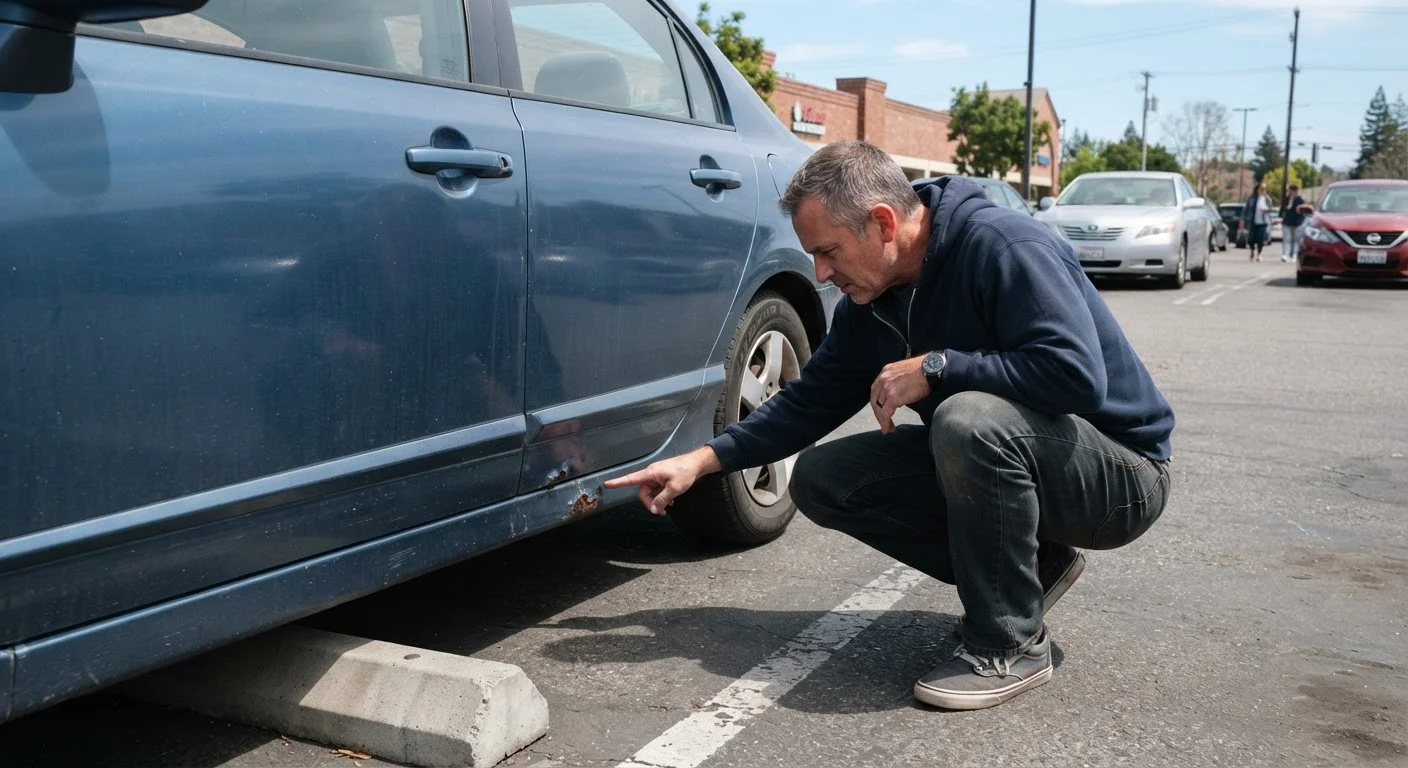
Document everything you find during your own walkthrough. Photographs of dents, rust spots, tire wear, and warning lights give you a factual basis for price negotiation or for deciding the car is not worth pursuing. Sellers often reduce asking prices when buyers can point to specific, documented problems rather than vague complaints.
The content provided on our blog site traverses numerous categories, offering readers valuable and practical information. Readers can use the editorial team’s research and data to gain more insights into their topics of interest. However, they are requested not to treat the articles as conclusive. The website team cannot be held responsible for differences in data or inaccuracies found across other platforms. Please also note that the site might also miss out on various schemes and offers available that the readers may find more beneficial than the ones we cover.