

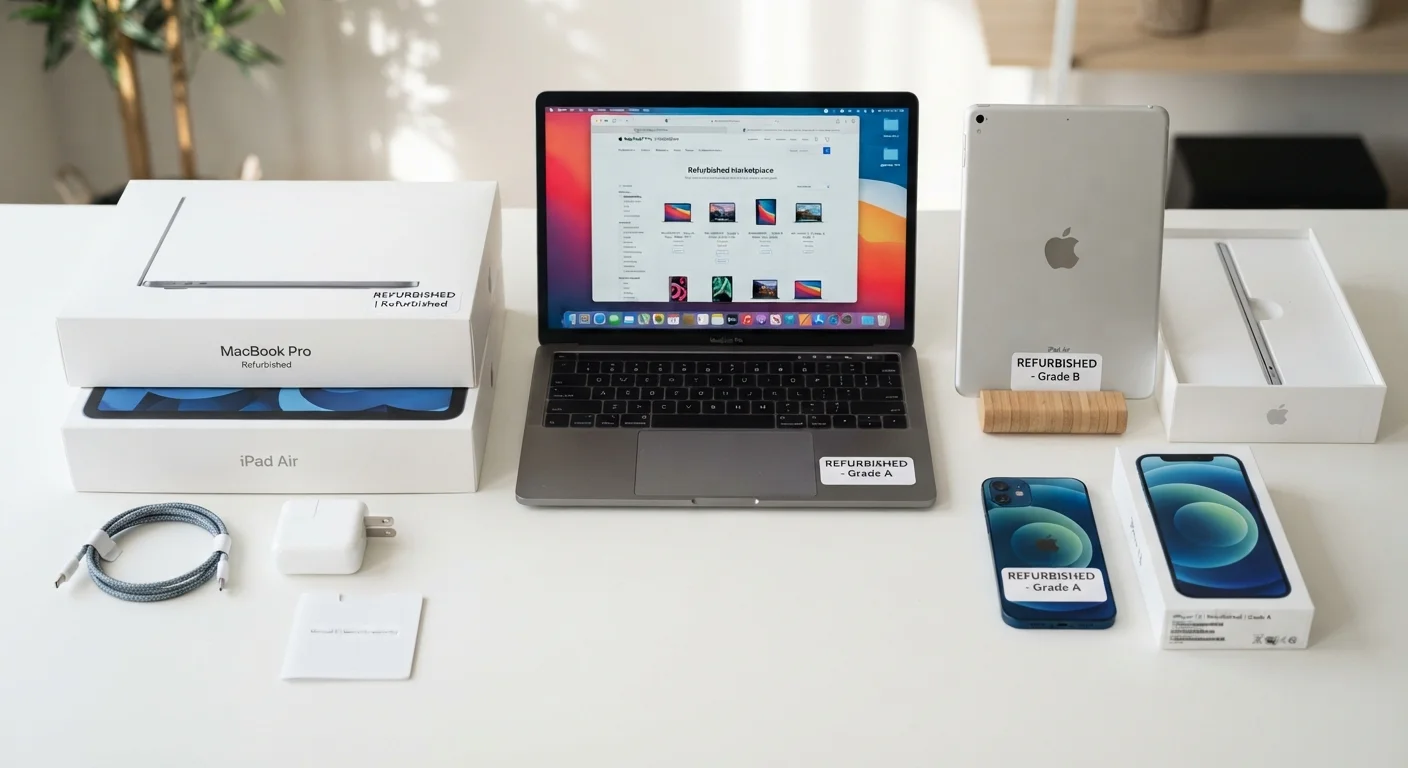
What refurbished actually means
The word "refurbished" covers a wide range of situations. A device might be refurbished because a customer returned it within the store's return window with no fault found. It might have had a minor defect that was repaired. It might have been a display model. In each case, the seller has inspected and tested the unit before resale.
What refurbished does not mean is that the device was heavily damaged or unreliable. A large share of units in certified programs were returned unused or with cosmetic issues only. The functional components work as expected.
The distinction that matters most is who performed the refurbishment. Manufacturer-certified programs, run by the original maker or an authorized partner, follow documented testing procedures and typically replace any failing components with genuine parts. Third-party refurbishers have no uniform standard, so quality can range from excellent to minimal.
How grading systems work
Grading tells you the cosmetic condition of a device. Most sellers use a letter or number scale, though no industry-wide standard exists. A seller using "Grade A" might mean something slightly different from another seller using the same label.
As a general guide, grades tend to follow this pattern:
- Grade A (or "Like New"): Minimal or no visible scratches, scuffs, or marks. May or may not include original packaging.
- Grade B: Light cosmetic wear visible under close inspection. Fully functional.
- Grade C: Noticeable scratches or marks, sometimes heavier wear. Functional, but visibly used.
Functional condition is separate from cosmetic grade. A reputable seller will state clearly that all listed devices pass power-on and hardware tests regardless of cosmetic grade. If a listing does not say this, treat it as a gap in disclosure rather than implied assurance.
Battery health is a common blind spot in grading. Some sellers disclose battery cycle count or remaining capacity; others do not. For laptops and smartphones especially, a battery that holds only 70 percent of its original charge will affect daily usability. Ask or look for this figure before purchasing. See what key electronics specs mean for more on evaluating device performance figures.
Check battery health before you commit
For smartphones and laptops, battery condition directly affects how useful a device is day to day. Some sellers disclose battery cycle count or health percentage in the listing. If a listing does not include this, contact the seller and ask before purchasing. A device with a battery below 80 percent capacity may need a replacement sooner than you expect, which adds to the real cost.
Warranty and buyer protections
Warranty coverage is where refurbished programs diverge most sharply. Manufacturer-certified programs typically offer 90 days to one year of warranty coverage, with some matching the full warranty period of new devices. Third-party programs may offer as little as 30 days.
Read what the warranty actually covers. Most cover hardware defects and functional failures. Fewer cover accidental damage. Some explicitly exclude battery degradation after a certain threshold.
Return windows matter too. A 15-day return window gives you enough time to test the device thoroughly. A 30-day window is more forgiving. Any window shorter than 15 days is a reason to look carefully at the seller's reputation and return process before committing.
Payment method adds another layer of protection. Many credit cards extend buyer protections on purchases, which can complement a short manufacturer warranty. Check your card's benefits before assuming you have no recourse after the seller's warranty expires.
For a broader look at what to verify before any electronics purchase, the family electronics buying checklist covers the questions worth asking across every category.
What to watch out for
A low price can reflect genuine savings from the refurbishing process, or it can reflect missing accessories, minimal testing, or a very short warranty. These are not the same value proposition.
Check whether the listing includes a charger. For many modern devices, proprietary chargers or cables cost $20 to $50 separately. A listing priced $30 less than a competitor but missing the charger may not be cheaper in practice.
Verify software status. Refurbished smartphones and tablets should be factory reset with no previous account linked. A device still tied to a previous owner's account may be locked or restricted. Reputable sellers confirm this, but verify it yourself when the device arrives.
Physical condition photos matter. Listings with only stock images rather than photos of the actual unit offer less assurance about cosmetic grade. Where possible, use sellers who photograph the actual device being sold.
The hidden costs of cheap electronics covers a wider set of price gaps that appear after purchase, which applies to refurbished and new budget devices alike.
Frequently Asked Questions
No. Used devices are sold as-is with no testing or repair guarantee. Certified refurbished products have been inspected, often repaired, and tested to a defined standard before resale. The certification can come from the original manufacturer or an authorized partner.
These grades describe cosmetic condition, not necessarily function. Grade A typically means minimal to no visible wear. Grade B may have light scratches or scuffs. Grade C can have more noticeable cosmetic flaws. Every seller defines these grades differently, so check the seller's own description.
Manufacturer-certified programs often provide 90 days to one year of warranty coverage. Third-party refurbishers vary from 30 days to one year. A handful of programs offer extended warranties for an additional fee. Always confirm warranty length and what it covers before purchasing.
Return policies depend entirely on the seller. Manufacturer programs generally offer a return window similar to new products. Third-party refurbishers may have shorter or stricter return windows. Read the return policy before you commit.
Not always. Some certified programs include original or equivalent accessories such as chargers and cables. Others ship generic accessories or none at all. Check what is included in the listing before purchasing, especially for devices where proprietary accessories are costly.
Manufacturer-certified refurbished devices, in particular, pass the same functional tests as new units. For everyday tasks like browsing, streaming, and schoolwork, a well-graded refurbished device can perform identically to a new one. Battery health is one variable worth checking, as it is not always disclosed upfront.
The content provided on our blog site traverses numerous categories, offering readers valuable and practical information. Readers can use the editorial team’s research and data to gain more insights into their topics of interest. However, they are requested not to treat the articles as conclusive. The website team cannot be held responsible for differences in data or inaccuracies found across other platforms. Please also note that the site might also miss out on various schemes and offers available that the readers may find more beneficial than the ones we cover.