

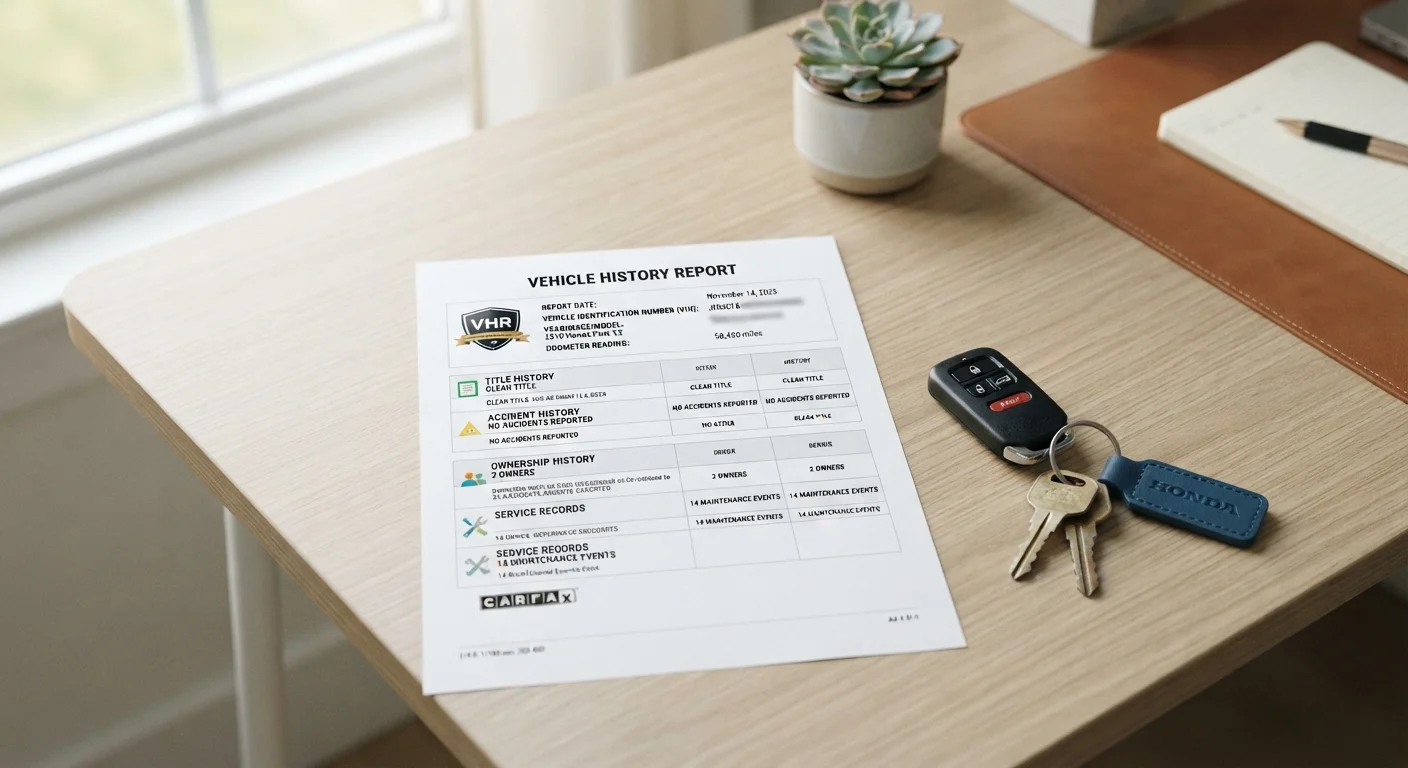
What the report actually contains
A vehicle history report is built from a VIN lookup that queries several databases at once. The data typically comes from state DMV records, insurance claim filings, auto auctions, junkyards, and repair shops that share information with reporting networks.
The main categories of data most reports cover:
- Title history: whether the title has ever been branded as salvage, rebuilt, flood-damaged, or lemon-law buyback.
- Accident and damage records: collisions reported to insurers or processed through auto auctions.
- Odometer readings: mileage logged at registration renewals, inspections, or dealer check-ins, which can flag rollback fraud.
- Ownership count: how many times the vehicle has changed hands and whether it was registered as a personal, rental, fleet, or commercial vehicle.
- Service and recall records: maintenance visits logged by participating shops, and any open or completed safety recalls.
Not every report includes all categories. A report's depth depends on which data partners the provider has agreements with and which states share their records electronically.
VIN format and where to find it
Every vehicle sold in the United States since 1981 has a 17-character VIN. You can find it on the dashboard near the windshield on the driver's side, on the driver's door jamb sticker, and on the vehicle's title and registration documents. Always confirm the VIN on the physical vehicle matches the one on the title before running any report.
Where the data comes from and why gaps exist
The most important thing to understand about vehicle history data is that it only reflects events that were recorded somewhere. A private-party fender bender paid in cash, a flood event in a state with minimal reporting, or bodywork done at an unlicensed shop produces no data trail.
Odometer fraud is one area where reports help more than most people expect. Because mileage gets logged at multiple touchpoints over a car's life, a suspicious drop between readings is a red flag the report surfaces clearly. Title branding is another area of genuine strength: once a title is branded, that status travels with the VIN through most states.
Accident records are less reliable. Whether a collision appears depends on whether the owner filed an insurance claim and whether that insurer contributed the data. Insurers vary in what they share, and some states have privacy rules that limit reporting. This means a vehicle can carry significant crash history that never shows up in any report.
How to read the data without over- or under-reacting
A branded title warrants serious attention. Salvage and rebuilt titles affect insurability, financing, and resale, and some lenders won't finance them at all. A lemon-law buyback record means a manufacturer repurchased the vehicle under warranty law, which is worth investigating further regardless of subsequent repairs.
A single reported accident is not automatically disqualifying. The relevant questions are: what part of the vehicle was damaged, what was the repair estimate, and was the airbag system involved? Structural damage and airbag deployment are more consequential than a bumper replacement.
High ownership counts are worth noting but not always a problem. A three-year-old car with four owners in a metropolitan area may have been cycled through a dealer network. A ten-year-old car with two careful owners who logged consistent service records is a different picture.
A clean report needs to be paired with a mechanic's inspection. Records reflect what was reported, not what a vehicle has actually been through. A qualified mechanic can identify signs of previous body repair, frame straightening, or fluid leaks that leave no database record.
Getting the most out of a report before you buy
Run the VIN before you travel to see the vehicle in person. Many state DMVs allow free VIN checks that confirm basic title status. Paid reports from established data providers give more detail, and running the same VIN through two services can surface discrepancies worth asking the seller about.
When you review a report, check the odometer entries chronologically and look for any gaps in the timeline. Years with no recorded activity could mean the car sat, or it could mean activity occurred in a state or shop that doesn't contribute data. Ask the seller directly.
Match the report's ownership history against what the seller tells you. If a private seller claims they've owned the car for five years but the report shows a title transfer two years ago, that's a conversation to have before proceeding.
The cost of a paid report is small relative to the cost of buying a vehicle with hidden problems. Think of it as one layer of due diligence, not a substitute for the full picture that only a mechanic's physical inspection can provide.
Frequently Asked Questions
Most reports cover title history, accident and damage records, odometer readings, the number of previous owners, and whether the vehicle was ever used as a rental or fleet car. Some include service records if the shop submitted data to the reporting network. Coverage depends on the data sources each provider uses.
No. If an accident was never reported to insurance or a participating shop, it will not appear in the report. Minor collisions that owners paid out of pocket are a common gap. A physical inspection by a mechanic can catch body repair evidence that a report misses.
A salvage title means an insurer declared the vehicle a total loss at some point, usually because repair costs exceeded a threshold relative to the car's value. The vehicle may have been repaired and put back on the road, but it typically carries lower resale value and can be harder to insure fully.
Different providers access overlapping but not identical data networks, so reports from two services on the same VIN can differ. Using more than one report reduces the chance of missing something, though it does not eliminate gaps caused by unreported events.
No. A report covers recorded events in databases; it cannot assess current mechanical condition, worn parts, or damage that was never logged anywhere. A pre-purchase inspection by a qualified mechanic is the only way to evaluate a vehicle's physical state.
The content provided on our blog site traverses numerous categories, offering readers valuable and practical information. Readers can use the editorial team’s research and data to gain more insights into their topics of interest. However, they are requested not to treat the articles as conclusive. The website team cannot be held responsible for differences in data or inaccuracies found across other platforms. Please also note that the site might also miss out on various schemes and offers available that the readers may find more beneficial than the ones we cover.